
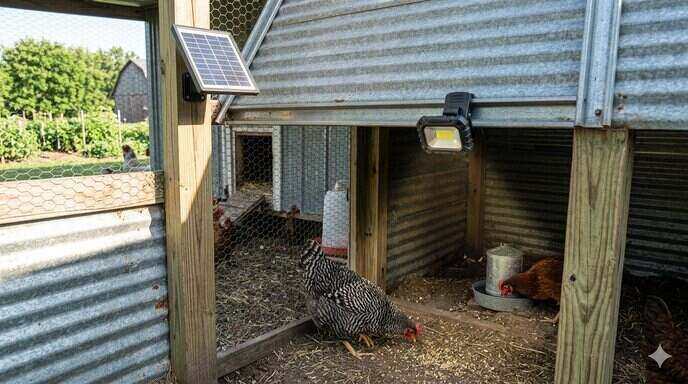
There is nothing quite like the knot in your stomach when you go out to lock up the flock and realize a deep shadow in the back of your metal run is hiding a potential predator entry point. Heavy corrugated steel panels provide excellent structural protection, but they create cavernous, pitch-black blind spots that stay dark even during a bright afternoon. Dragging grid-tied extension cords across your property to run shop lights invite dangerous shock hazards in damp dirt. Independent solar power is the most practical solution for an isolated metal run because it safely brings brilliant illumination exactly where shadows linger, all without trenching expensive wires across your yard.
In my coop, I’ve found that standard lawn stakes or fragile plastic garden lights don’t hold up to the heavy dust and physical bumping of an active poultry flock. To eliminate those stubborn blind spots, you need heavy-duty, low-profile fixtures that mount flush to your metal framing supports. If you want a quick way to banish those shadows, I highly recommend reading my real-world analysis of the best clip-on solar COB lights built to withstand rough barnyard use. They bite tightly onto steel framing without forcing you to drill compromising holes through your metal roofing.
The Off-Grid Advantage
Banish shadows from your galvanized run using independent solar power presents unique benefits for the modern homesteader:
- Zero Fire and Shock Risk: Low-voltage solar fixtures completely eliminate the risk of a high-voltage short circuit in wet ground or dusty litter.
- Smart Night watch: The systems activate automatically as dusk settles, ensuring your vulnerable corners are lit before your hens head inside to roost.
- No Added Overhead: You get a fully illuminated security boundary around your metal run with absolutely zero impact on your monthly electric bill.
Banish Shadows from Your Metal Run
Before upgrading your setup, take a close look at your covered run during twilight to check for these specific structural and behavioral issues:
- Varmint Digging Points: Check the dark, unlit corners of your perimeter mesh. Look closely for fresh, loose dirt or tunneling attempts hidden by the shadows.
- Run Condensation and Mildew: Inspect the interior steel corners where shadows gather. If the panels are damp or showing black spots, poor air movement is trapped in that dark zone.
- Hens Refusing to Explore: If your birds crowd into one bright side of the run and completely avoid the rear sections, those deep shadows are causing your flock unnecessary stress.
- Hidden Mite Infestations: Take a flashlight to the dark joints where your metal panels meet wooden support posts. Parasites thrive in permanent darkness.
The “Homestead Setup” Plan
You don’t need an electrical background to transform your metal run into a bright, safe environment. Follow this straightforward 3-step action plan:
- Expose the Collection Panel: Mount your solar collector high on the exterior south-facing eave of your metal structure using heavy-duty magnetic brackets to keep it clear of shadows.
- Anchor the Interior Fixtures: Snap your heavy-duty clip-on units directly onto the internal horizontal steel purlins or support trusses right above your darkest blind spots.
- Conduit Your Down-Lines: Run the connection cables cleanly along the internal steel ribs. Encase the wires in flexible plastic split-conduit to prevent curious birds from pulling on loose lines.
Solar Maintenance (Pro Advice)
To keep your off-grid safety gear firing on all cylinders through heavy dust and shifting seasons, build these four habits into your routine:
- The Saturday Lens Wipe: Oily chicken dander settles on everything. Wipe the external solar panel and your internal light lenses with a damp rag weekly to maintain a 100% power charge.
- Inspect the Bite Joints: Check your spring clamps every month. Active flocks can shake a metal structure when they fly off roosts; ensure the clamps haven’t migrated.
- Winter Panel Angle Shift: In late autumn, tilt your solar panels down toward the southern horizon to capture the lower winter sun and maintain maximum battery reserve.
- Check the Gaskets: Ensure the rubber water-sealing plugs over the charging ports stay pushed in tight to protect internal components from fine coop dust.
FAQs
Will these lights turn on if my metal run has a solid roof? Yes, provided you use a split-system design where the solar panel sits outside on the roof panels while the cord runs inside to power the interior lights hung in the dark corners.
Are the bright lights going to keep my chickens awake at night? They can if left on indefinitely. To prevent disrupting their sleep, choose motion-activated models or fixtures equipped with an automatic shut-off timer that turns off an hour after dusk.
Do these solar setups stand up to freezing winter weather? Quality systems use lithium-iron-phosphate or advanced lithium batteries that handle cold well, though runtime will shorten slightly during extreme sub-zero stretches.
Conclusion
Eliminating the dark zones in your metal run shouldn’t involve complex wiring or risking your flock’s safety with cheap extension cords. With a small investment in rugged, self-contained solar gear, you can keep your property secure and give your hens the confidence to use every square inch of their space.
Final Expert Tip: My girls were much happier once I targeted the dark corner right behind their dust-bathing box. Chickens feel incredibly vulnerable when their vision is limited while bathing—brightening that single corner completely changed how relaxed my flock was during the afternoon!
