
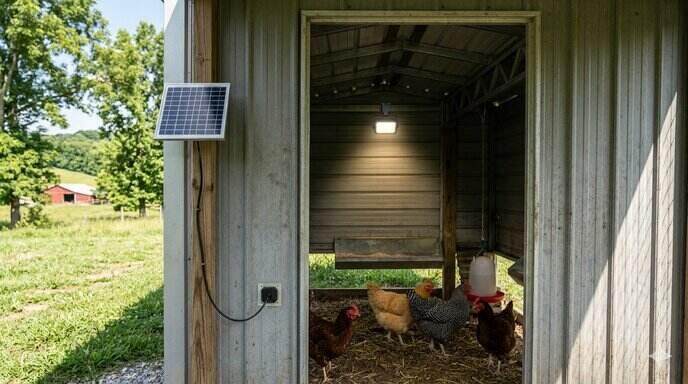
Locking up a flock inside a heavy steel coop at twilight shouldn’t feel like entering a blackout chamber. Metal outbuildings are fantastic for keeping digging predators out, but their solid galvanized walls block all ambient moonlight, leaving your birds in pitch-black darkness the second the door swings shut. Trying to solve this by running standard orange extension cords from the house is a massive hazard in a dusty barnyard. Independent solar power is the most practical solution for an isolated steel setup because it harvest energy right from your roof, giving you instant illumination exactly where you need it without the risk of a high-voltage short circuit.
In my coop, I’ve found that standard glass shop lights or fragile yard stakes can’t handle the intense dust and humidity that bounces off steel panels. To keep your interior bright and safe, you need low-voltage, moisture-resistant fixtures that mount flush to your structural ribs. For an easy way to clear up those interior shadows, I highly recommend checking out my comprehensive breakdown of the best solar-powered coop lights currently built for rugged farm environments. They offer the perfect balance of brightness and durability without requiring you to punch leaky holes through your solid metal panels.
The Off-Grid Advantage
Bringing sustainable sun power into a metal structural setup offers specific advantages that keep your homestead running smoothly:
- Zero Shock and Fire Risk: Condensation on metal walls can cause standard grid wiring to short out. Low-voltage solar gear eliminates the risk of an electrical fire in your dry bedding.
- Structural Integrity: Because these systems are self-contained, you don’t have to drill wide holes through your heavy-gauge siding to run thick conduit lines.
- Automatic Consistency: The system works independently of grid failures, ensuring your flock has reliable evening light even if a summer storm knocks out your house power.
Identifying Blind Spots in a Metal Setup
Walk into your steel building right as the sun sets and look for these specific red flags to see where your lighting is failing:
- Floor Roosting Crowds: Look into the corners. If your hens are huddled together on the dirt or floor bedding instead of up on the wooden bars, they cannot see well enough to navigate the jump.
- Wall Sweating and Rust: Run your hand along the interior steel panels. Heavy condensation or slick walls mean moisture is trapped, which can cause respiratory issues for your birds if left unmanaged.
- Nesting Box Avoidance: Check for broken or dirty eggs on the floor. If hens can’t see inside deep metal nesting boxes, they will drop eggs wherever they stand.
- Chewed Wire Insulation: Inspect any existing low-voltage lines along the baseboards. Look for signs of tiny teeth marks or frayed edges indicating that mice are moving through the dark framework.
The 3-Step Steel Setup Plan
You can install a safe, high-powered off-grid lighting system in a metal building using basic hardware. Here is my tried-and-true installation plan:
- Mount the External Panel: Attach the solar collector to your south-facing roofline or upper eave. Use heavy-duty magnetic mounts or self-tapping screws sealed with a dab of silicone to prevent water leaks.
- Thread the Feed Line: Pass the thin power cable through an existing ridge vent or under the eave flashing. Keep the line pulled taut against the steel frame using magnetic cable ties.
- Position the Main Fixture: Mount your light fixture directly over the central aisle or feeding station. Adjust the angle so it illuminates the food trays and roosting bars while leaving the nesting boxes in soft shadow.
Solar Maintenance (Pro Advice)
Metal coops generate a unique combination of fine dust and static electricity that attracts dander. Keep your solar system running smoothly with these four habits:
- The Saturday Lens Wipe: Chicken dander creates an oily film that settles quickly. Wipe down your external solar panel and internal light covers with a microfiber cloth every weekend to prevent a 30% drop in charging efficiency.
- Protect the PECK Zones: Chickens are naturally curious and will peck at anything resembling a worm. Encase all exposed interior wiring in flexible plastic split-conduit along the walls.
- Adjust for Shifting Seasons: Every autumn, tilt your exterior solar panel further down toward the southern horizon to capture the lower winter sun, ensuring your battery stays fully charged on short days.
- Inspect the Sealing Plugs: Check the rubber gaskets on the back of your light fixtures monthly. Ensure they are seated tightly to keep fine dander from creeping into the circuitry.
FAQs
Can the solar panel charge efficiently if it is mounted flat on a metal roof? It will charge, but it isn’t ideal. Mounting the panel at a 45-degree angle facing south allows it to shed winter snow, rinse clean during rainstorms, and capture significantly more sunlight than a flat mount.
Will automated evening lights cause my hens to molt prematurely? No. In fact, keeping your lighting consistent (around 14 hours of total light) during the autumn transition helps prevent a sudden drop in egg production and supports a smooth, predictable molting cycle.
How do I clean the internal fixtures without damaging the electronics? Turn the system off completely. Use a dry, soft-bristled brush to sweep away caked-on dust and dander, then wipe the exterior casing with a damp cloth. Never spray water directly onto the fixture.
Conclusion
Illuminating a steel poultry setup doesn’t require complicated electrical work or running dangerous wires across your property. With a rugged, self-contained solar setup, you can eliminate dark corners, make your evening chores a breeze, and provide a secure, comfortable environment for your flock.
Final Expert Tip: My girls were much happier once I positioned the interior light so it cast a soft glow across the main ramp. If you have younger pullets that are struggling to find the doorway at dusk, place your light near the entrance for a few days—the hens will instinctively march right toward the warm glow when the sun starts to set!
