
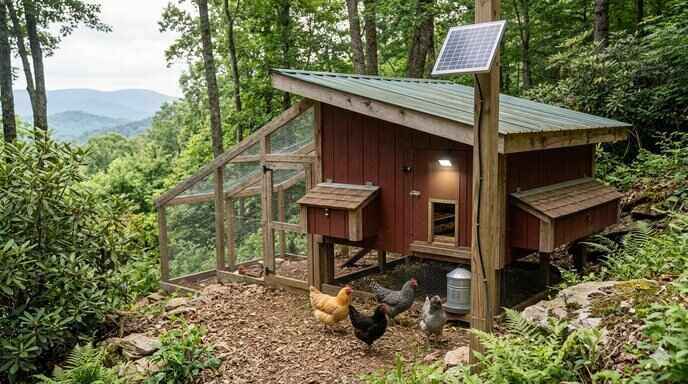
Heading out to lock up the coop on a stormy night, only to find yourself plunging your hand into a dark corner where you can’t tell a hen from a hiding raccoon, is enough to shake any keeper’s confidence. For those of us utilizing corrugated steel or metal hen houses, achieving reliable visibility is notoriously tough because these structures block out all natural ambient moonlight. Running high-voltage grid lines across a damp yard creates a serious shock hazard. Independent solar power stands as the most practical solution for remote outbuildings because it harvest free energy right from your roof, illuminating your interior without risking a devastating electrical short circuit.
In my coop, I’ve found that standard glass incandescent bulbs or fragile plastic LED strips simply cannot survive the intense vibration and deep dust that defines a metal building. To ensure your birds stay safe, you need durable, surface-mounted chip-on-board tech that won’t shatter when a heavy door slams shut. If you want a dependable, tool-free setup, I highly suggest checking out my real-world review of the best clip-on coop lighting option on the market today. These units provide brilliant, uniform illumination that fills the entire space while clamping securely onto your existing interior steel framing rails.
The Off-Grid Advantage
Upgrading to solar-powered COB (Chip-on-Board) fixtures inside a metal building delivers unique benefits focused squarely on homestead safety:
- Zero Thermal Fire Risk: COB LEDs pack multiple light chips directly onto a single substrate, meaning they run remarkably cool and eliminate the risk of igniting dry bedding or airborne dander.
- Low-Voltage Security: Unlike 110V household wiring which can ground out dangerously against a conductive metal wall if a wire gets nicked, low-voltage solar systems remain completely safe to touch.
- Autonomous Schedules: The self-contained setup charges automatically during peak daylight hours, standing ready to flood your coop with light the moment dusk settles.
How to Evaluate Safety and Stress in Your Hen House
Step inside your metal building during the evening hours and inspect your flock for these critical structural and behavioral warning signs:
- Floor Huddling Behavior: Look into the lower dark corners. If your hens are refusing to fly up to their roosting bars and are piling up on the floor instead, they can’t see well enough to judge the distance safely.
- Shattered Bulb Glass: Examine any older lighting fixtures. If you find hairline cracks in glass coverings, the intense thermal expansion and structural vibration of your metal framing are wearing them down.
- Moisture Trapped in Ribs: Check the ceiling joists. Heavy condensation building up on the bare metal interior indicates high humidity, which can rust out cheap electrical components quickly.
- Rodent Highway Activity: Look for tiny, dark droppings along the upper wall tracking where the metal roof meets the frame. Pests use these dark shadows to navigate toward your feed bins undetected.
The 3-Step COB Installation Plan
You don’t need an engineering degree or expensive tools to mount a highly resilient, off-grid lighting system. Follow this straightforward plan:
- Secure the External Panel: Place your solar collector panel on the highest point of your south-facing roofline. Use strong magnetic mounts or self-tapping screws sealed with outdoor silicone to guarantee a watertight seal.
- Thread and Shield the Cable: Run your power line through an existing eave vent or ridge gap. Immediately tuck the cable into split-plastic wire loom to protect it from sharp metal edges and curious beaks.
- Clamp the COB Unit: Squeeze the spring clamp directly onto a structural steel truss right above your central aisle. Angle the light panel down toward the feeders and waterers, keeping it high enough to stay out of the flight path of your birds.
Solar Maintenance (Pro Advice)
A dusty barnyard environment requires regular upkeep to keep your off-grid investment running efficiently. Build these simple habits into your routine:
- The Saturday Dander Wipe: Fine chicken dander carries natural body oils that stick to glass surfaces. Wipe down your external panel and internal COB lenses with a damp microfiber cloth weekly to prevent a 25% drop in light output.
- Inspect the Wire Routing: Chickens love to tug on anything dangling. Walk the length of your power cable once a month to ensure all zip ties or magnetic clips are holding the wire perfectly flush to the steel siding.
- Winter Angle Adjustment: As days get shorter, tilt your solar panel further down toward the southern horizon to capture the low winter sun, ensuring your internal batteries hit a full charge every single day.
FAQs
Why are COB lights specifically better than standard LEDs for a chicken coop? Standard LEDs use individual bulbs that create harsh, pin-point glare and deep shadows, which can startle nervous hens. COB lights blend multiple small chips into one seamless panel, providing a soft, widespread flood of light that keeps the birds completely calm.
Will the high humidity inside a metal coop damage the internal battery? Not if you select weather-rated fixtures. Always look for components carrying at least an IP65 waterproof rating, which guarantees the casing is sealed tightly against both heavy humidity and fine, airborne coop dust.
How many hours of light should I provide for my laying hens? To maintain steady egg production through the darker months, aim for roughly 14 hours of total light. Set your solar timer to provide a few hours of extra illumination in the early morning rather than late at night, so your birds are never caught off guard when the light shuts off.
Conclusion
Upgrading the lighting inside your metal hen house doesn’t have to mean compromising on safety or spending a fortune on professional electrical work. By switching over to cool-running, off-grid COB fixtures, you protect your flock from fire hazards while making your daily evening chores incredibly easy.
Final Expert Tip: My girls were much happier once I positioned the clip-on light so the edge of the beam softly reached the nesting box openings without shining directly inside. Hens prefer a dim, private space to lay their eggs, so keeping the high-intensity light focused strictly on the main walking aisle gives you the best of both worlds!
