
Keeping chicken feed safe from mice and rats is one of the biggest challenges for backyard poultry owners. These pests not only eat the feed but also spread diseases and cause damage. Manual cleaning and regular checks help, but for lasting results, you need automatic solutions that work even when you’re not watching. This guide covers practical, automatic ways to protect your chicken feed, save money, and keep your flock healthy.
We’ve mapped out exactly how to stake your devices in sunlit spots around the perimeter fence to maximize their audio range. Feel free to check out our breakdown of the most reliable solar ultrasonic mouse repellents to upgrade your backyard layout this weekend.
Why Mice And Rats Love Chicken Feed
Both mice and rats are attracted to chicken feed because it’s high in energy and always available. Even a few spilled grains can draw them in. Once they find a reliable food source, they come back night after night and often bring friends. Over time, this leads to:
- Wasted feed (up to 20% loss in some cases)
- Contaminated food (urine, droppings, and disease risk)
- Damaged storage (chewed plastic, wood, or bags)
- Health risks for chickens (salmonella, parasites)
Many poultry owners underestimate how quickly rodent populations grow. A pair of rats can produce 2,000 offspring in a year if food is always available.
Automatic Rodent-proof Feeders
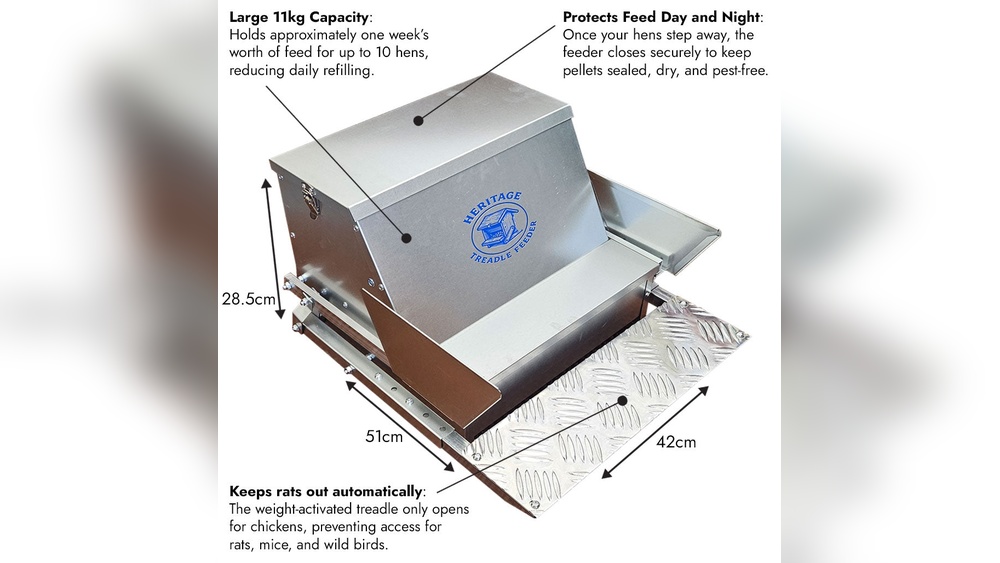
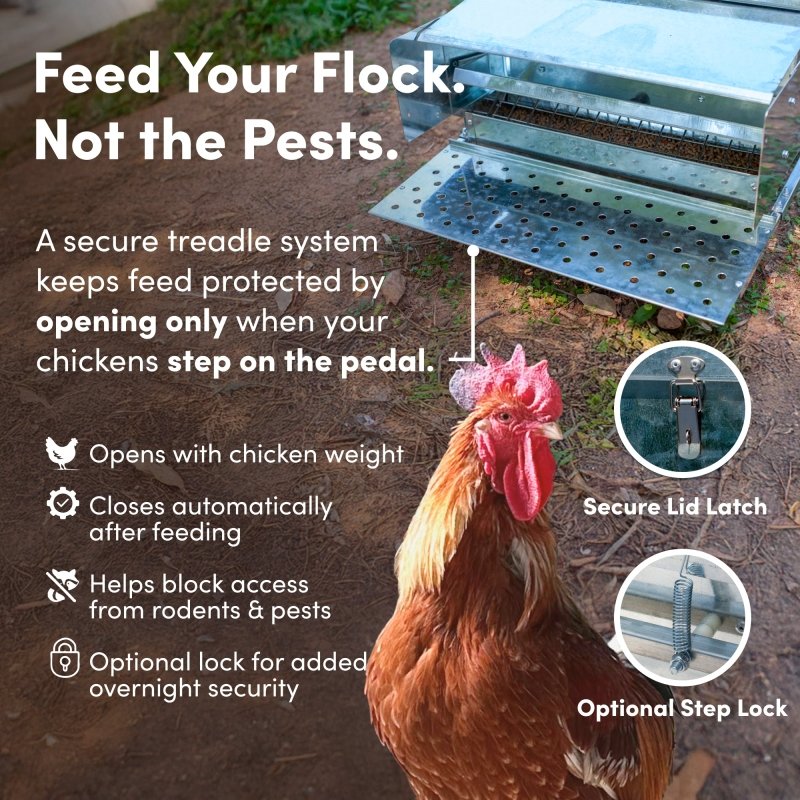
One of the easiest ways to stop rodents is to use automatic feeders designed to block pests. These feeders only release feed when a chicken steps on a trigger plate or pecks a lever. Most mice and rats are too light or too slow to operate them.
| Feeder Type | Rodent Protection | Chicken Access | Maintenance |
|---|---|---|---|
| Treadle Feeder | Excellent | Easy | Low |
| Gravity Feeder (open) | Poor | Very Easy | Low |
| Hopper Feeder with Lid | Good | Moderate | Medium |
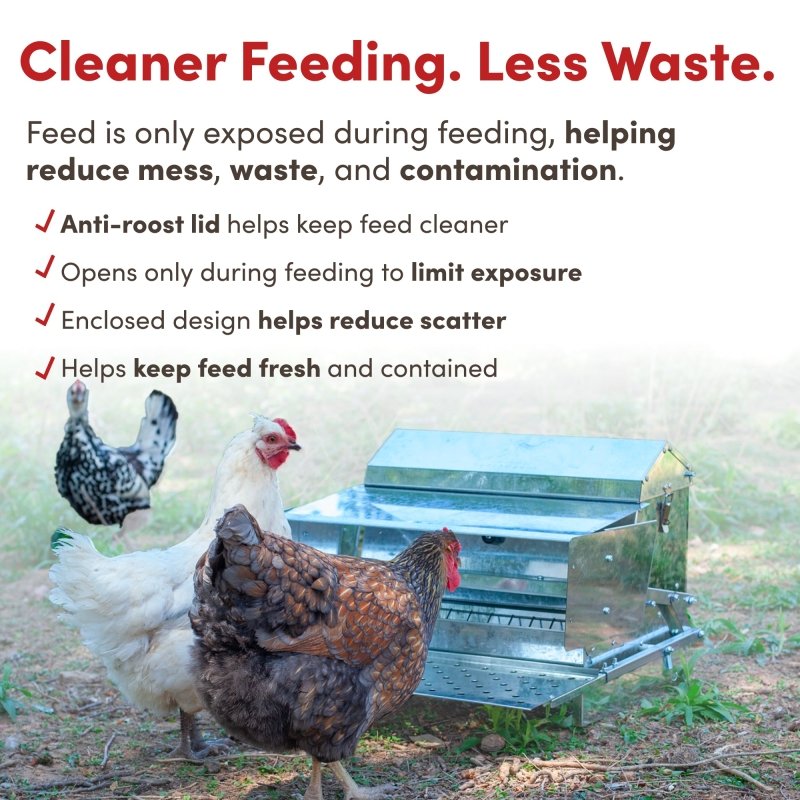
Treadle feeders are the best option for automatic rodent control. These feeders close tightly when not in use and only open under the weight of a chicken. Look for models with metal construction, as rodents can chew through wood or plastic.
Pro tip: Place feeders on a solid, level surface. If the ground is soft, rats may tunnel underneath.
Automatic Feed Storage Solutions
Even with a good feeder, you need to store extra feed safely. Automatic storage bins with self-closing lids or locking mechanisms help keep rodents out.
| Storage Type | Rodent Resistance | Ease of Use | Cost |
|---|---|---|---|
| Metal Bin with Locking Lid | High | Easy | Medium |
| Plastic Storage Tote | Low | Very Easy | Low |
| Automated Bin (spring lid) | Excellent | Moderate | High |
A metal bin with a tight-fitting lid is a classic, effective choice. For even more automation, use bins with a spring-loaded or pedal-operated lid. These only open when a person is present and close themselves, reducing the chance a rodent slips inside.
Non-obvious tip: Store feed bins off the ground on a platform or bricks. This extra barrier makes it harder for rodents to reach the food.
Automatic Coop And Feed Area Management
Technology can help further reduce rodent problems. Consider these automated tools:
- Automatic coop doors: These doors close at dusk, locking out rodents at night when they’re most active.
- Motion-activated lights: Sudden light scares away nocturnal pests, making the feed area less attractive.
- Electronic pest repellents: Some devices emit ultrasonic sounds that deter rodents. Results vary, but they can add an extra layer of protection.
Practical example: One backyard owner installed an automatic door and noticed a 70% drop in rodent sightings within a month. Combining automatic feeders and doors usually brings the best results.
Reducing Attractants And Habitats
Automatic solutions work best when you reduce what attracts rodents in the first place.
- Sweep up spilled feed daily, or use mats under feeders to catch stray grains.
- Trim grass and weeds near the coop to remove hiding spots.
- Remove old wood, junk, or unused nesting boxes where rodents might nest.
Beginner mistake: Many people focus only on feeders and forget that open water sources (like leaky drinkers) also attract rodents. Check waterers regularly and fix leaks.
How Automatic Solutions Save Time And Money
Switching to automatic systems may cost more up front, but it pays off:
- Less wasted feed means savings over time. Farmers lose an average of $50–$100 per year on rodent damage for a small flock.
- Healthier chickens: Fewer diseases and better egg production.
- Less daily labor: Fewer checks and clean-ups needed.
Some insurance policies for small farms even require rodent-proof storage, so automatic solutions can help with compliance.
Real-world Success Stories
Many chicken keepers see big improvements with automatic rodent control. For example, a farm in Texas installed treadle feeders and metal bins, leading to a 90% reduction in feed losses. Another hobbyist used motion-activated lights and caught only one mouse in six months, compared to dozens before.
The key is combining strategies: secure feeders, safe storage, and good coop management. Don’t rely on just one tool.

Frequently Asked Questions
How Do I Train Chickens To Use A Treadle Feeder?
Start by leaving the lid open for a few days, so chickens see the food. Gradually close the lid over several days, allowing them to learn the stepping action. Most chickens adapt quickly, but some may need extra encouragement.
Can Rats Really Chew Through Plastic And Wood?
Yes, both rats and mice have strong teeth that can chew through wood, plastic, and even thin metal. That’s why metal feeders and bins are best for long-term protection.
Will Automatic Solutions Remove All Rodents?
Automatic methods greatly reduce rodent problems, but rarely eliminate them completely. Combine these with good sanitation and regular checks for the best results.
Are Ultrasonic Rodent Repellents Safe For Chickens?
Most ultrasonic repellents are safe for chickens, but their effectiveness is debated. Always choose products specifically labeled for poultry areas and monitor your flock for any stress signs.
Where Can I Learn More About Rodent Control For Poultry?
The Centers for Disease Control and Prevention (CDC) offers trusted advice on farm rodent control: CDC Rodent Control.
Adopting automatic solutions for your chicken feed is a smart way to protect your flock and your investment. With secure feeders, smart storage, and a few technology upgrades, you can keep rodents away with less effort—giving you more time to enjoy your healthy chickens.
