
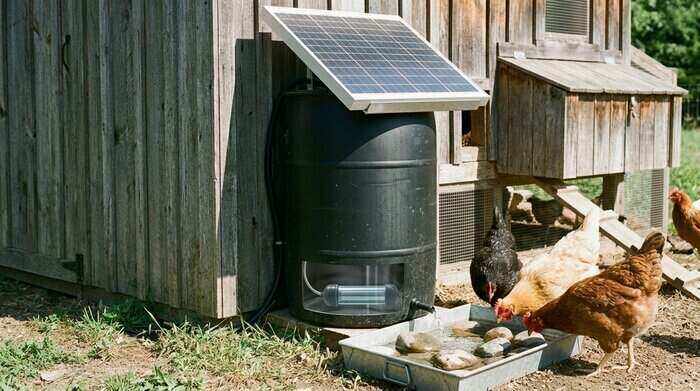
Managing a large, 55-gallon gravity-fed water barrel is a great way to cut down on your daily farm chores, right up until you open the lid and catch a whiff of sour, swampy water. Scrubbing out a massive water storage tank by hand takes a ton of physical labor, and if your coop sits far out in the back pasture, running a 150-foot extension cord out to it introduces a massive fire hazard to your flock’s home. Off-grid solar power is the most practical solution for remote setups because it captures free, daily sunlight to run automated cleaning cycles, sanitizing your large-scale water containers without needing an electrical outlet.
In my coop, I’ve found that large-capacity barrels are incredibly vulnerable to heat-loving pathogens and rapid algae growth. Traditional chemical flushes like bleach can quickly become toxic if miscalculated, and they leave behind harsh tastes that discourage your hens from drinking enough water. To keep big reservoirs pristine on autopilot, you need a safe, chemical-free way to destroy bacteria at the source. If you are ready to stop hauling heavy scrub brushes and empty barrels, check out my comprehensive, real-world review of the top-rated solar water sanitizers to see how these low-voltage, drop-in kits can completely handle the chore for you.
The Off-Grid Advantage
Automating your large-tank sanitation with dedicated solar technology brings distinct advantages that protect both your birds and your wallet:
- Zero Extension Cord Overloads: These setups run on low-voltage direct current (DC), completely eliminating the serious structural fire and shock hazards of running high-voltage lines through damp coop bedding.
- Proportional Cleaning Power: Because the system relies on daylight, it naturally runs longest and hardest during the blistering afternoon hours when water temperatures peak and bacteria reproduce the fastest.
- No Added Overhead Costs: Once your equipment is mounted, the entire sanitation cycle operates on free solar energy, maintaining top-tier farm biosecurity with absolutely zero impact on your monthly electric bill.
Signs Your Large Water Tank Needs Immediate Sanitation
Because big barrels hold so much volume, underlying water quality issues can stew hidden for weeks before a major outbreak occurs. Watch out for these common warning signs:
- Green or Brown Tank Walls: Peer inside your storage reservoir with a flashlight. If you notice a dark coating on the interior walls, algae has established a stronghold and is actively consuming your flock’s oxygen supply.
- Sluggish, Coughing Chickens: Keep a close eye on your hens during morning feedings. Birds that stand listlessly with raspy breathing or persistent gurgling noises are often suffering from respiratory issues caused by inhaling stagnant water vapors.
- A Slimy Layer on Drinking Nipples: Check your external cups or nipple attachments. If the plastic components feel greasy or slippery to the touch, a dense bacterial biofilm is actively clogging your water lines.
- Strong Sulfur or Rotten-Egg Odor: Pop the main lid on your storage barrel and take a quick sniff. A strong, earthy, or sulfur-like smell means harmful anaerobic bacteria have completely overtaken the deep water columns.
The 3-Step Solar Sanitation Plan
Transitioning your large water barrel to an automated solar setup is a highly accessible DIY task that requires no technical electrical experience. Follow this 3-step action plan:
- Mount the Collector Panel: Fasten your small solar panel to the highest, south-facing peak of your coop’s roof line. Angle it toward the midday sun, ensuring it sits entirely clear of shadows from overhanging tree branches.
- Submerge the Low-Voltage Sanitizer: Drop your compact, waterproof sanitizing unit directly through the top opening of your large water tank, letting it settle right in the middle of the water column. Route the insulated cable neatly out through the lid.
- Shield Your Exposed Power Lines: Thread the low-voltage power cable through a protective length of rigid PVC pipe or heavy-duty split wire loom. Clamp the protective armor tightly to the exterior frame of your coop to keep the wires completely safe from curious, pecking beaks.
Solar Maintenance (Pro Advice)
Coop yards are filled with flying feathers, kicking dust, and debris that can quickly coat your equipment and drop its output. Keep your solar system working perfectly with these quick habits:
- Give the Panel a Saturday Wipe: Barnyard dust forms a dull, chalky layer over solar collectors. Wipe the glass surface with a damp towel every weekend to avoid a sudden 25% drop in solar charging efficiency.
- Rinse the Submerged Sensor Sleeve: Minerals and water scale can form a cloudy coating over the submerged unit’s housing. Pull the device out once a month and give it a quick wipe with plain white vinegar to keep it working at full power.
- Inspect Wiring Paths Weekly: Chickens love to peck at loose loops that look like earthworms. Do a swift visual sweep during your weekly chores to confirm that all protective wire shielding remains tightly locked down and undamaged.
FAQs
Will a solar-powered water sanitizer work on dark, overcast winter days? Yes, it will. Most off-grid poultry water kits come equipped with a small, built-in battery backup. The system stores excess power on bright days so the cleaning cycles can continue working reliably even through long stretches of gray, gloomy weather.
Can I use these automated solar sanitizers inside a galvanized steel tank? It is highly recommended to stick with food-grade, opaque plastic barrels for these systems. Low-voltage sanitizing waves interact best with non-reactive surfaces, and using plastic completely eliminates any concerns about long-term rust or chemical leaching.
My girls always kick dirt into the drinking cups. Will this system clear out mud? Solar sanitizers are designed to kill microscopic bacteria and pathogens, but they won’t dissolve physical dirt or organic matter. My girls were much happier once I positioned the drinking cups a few inches above their back height, keeping kicked-up dirt and bedding out of the water altogether.
Conclusion
You don’t need to spend your valuable weekend hours draining and scrubbing massive water barrels or risking safety with extension cords. Using the natural, automated power of the sun keeps your large-scale waterers crisp and clean, slashes your weekly chore list, and keeps your homestead operating smoothly on its own terms.
Final Expert Tip: In my coop, I’ve found that using a completely black or dark blue storage barrel is a total game changer. Light-colored barrels let sunlight pass through the plastic, which acts as fuel for rapid algae growth. By pairing a dark, light-blocking barrel with an automated solar sanitizer, you cut off the algae’s life support from both sides, keeping your maintenance down to a simple check-in once every few months!
