
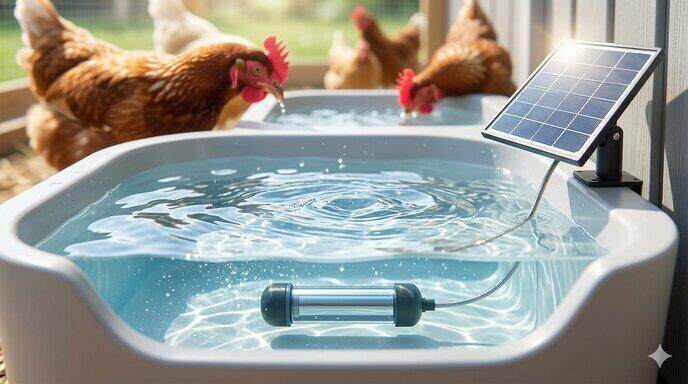
Walking into a humid coop only to find your hens crowding around a murky, foul-smelling water basin is an immediate red flag for any homesteader. Waterborne pathogens like Salmonella, E. coli, and nasty intestinal parasites love to breed in warm, stagnant poultry drinking water. When your setup sits far from a utility pole, running high-voltage extension cords across your pasture creates a massive fire hazard in dry straw bedding. Off-grid solar power is the most practical solution for remote coops because it harvests free, ambient daylight to run automated purification setups, destroying dangerous bacteria right where your birds drink without any grid access.
In my coop, I’ve found that even daily water changes aren’t enough to stop bacterial outbreaks when the summer heat kicks in. Chickens constantly backwash food debris, dirt, and feces directly into their drinking cups, creating an instant breeding ground for invisible pathogens. To protect your flock’s gut health on autopilot, you need a targeted setup that neutralizes these microbes at a cellular level. If you are ready to eliminate the daily scrubbing routine and secure your biosecurity, be sure to read my breakdown of the Best solar powered uv water purifiers for backyard chicken flocks to see which plug-and-play units performed best during our off-grid farm trials.
The Off-Grid Advantage
Upgrading to a solar-assisted water purification layout brings incredible practical benefits to your daily homestead management:
- Zero Shock or Fire Hazards: Low-voltage direct current (DC) solar kits remove all structural electrical fire risks associated with dragging 120V grid cords out through damp soil and chicken manure.
- Automatic Daytime Sanitation: The system operates at peak capacity during the sunniest parts of the day—the exact timeframe when water temperatures climb and dangerous bacterial reproduction explodes.
- No Monthly Overhead Costs: You get premium, continuous water sterilization year-round with absolutely zero impact on your household electric bill.
Spotting Contamination Red Flags in Your Basins
Don’t wait for your birds to get sick before taking action. Walk out to your chicken run today and inspect your watering stations for these specific warning signs:
- Lethargic or Fluffed-Up Hens: Watch your flock’s posture. Hens standing alone with hunched backs, fluffed feathers, or pale combs are often battling a severe, waterborne intestinal infection.
- A Smelly, Sticky Biofilm Layer: Empty your waterer and rub your fingers along the bottom floor. If the plastic surface feels slick, slimy, or has a distinct sour smell, a dense bacterial colony has successfully bonded to the basin.
- Water Discolored by Feed Backwash: Look into the drinking trays. If the water has turned cloudy, yellow, or brown from soggy, fermented chicken feed droppings, it is actively breeding harmful microbes.
- Watery, Foamy Droppings in the Run: Check the coop floor. An influx of unusually loose, green, or foamy droppings across the flock is a classic symptom of a water system contaminated with parasites like coccidia.
The 3-Step Homestead Sanitation Plan
Setting up an automated solar purification loop is a straightforward DIY project that requires zero advanced electrical knowledge. Follow this simple 3-step action plan:
- Mount the Energy Collector: Secure your small solar panel to a clear, south-facing section of your coop or run roof. Angle it toward the afternoon sun, making sure it remains completely clear of shadows from nearby tree lines.
- Submerge the Low-Voltage Purifier: Drop your compact, waterproof UV sanitizing element or low-voltage pump filter directly into the center of your primary water holding barrel. Route the heavily insulated power line out through a snug notch cut into the container’s lid.
- Armour All Exposed Lines: Thread the low-voltage power cable through a length of rigid PVC pipe or heavy-duty split-plastic wire loom. Secure the protective casing tightly with zip ties along the coop’s support studs to keep wires completely hidden from curious, pecking beaks.
Solar Maintenance (Pro Advice)
Poultry runs are notoriously dusty places filled with flying dander and kicked-up bedding that can degrade your equipment’s efficiency. Keep your gear running smoothly with these quick maintenance habits:
- The Saturday Panel Wipe: Sticky chicken dander forms a dull, chalky film over solar panels very quickly. Wipe the panel glass with a soft, damp cloth every weekend to prevent an immediate 25% drop in solar output.
- Clean the Protective Quartz Sleeve: The underwater sleeve protecting your sanitizer bulb can gather mineral scale over time. Pull the unit out monthly and wipe it down with plain white vinegar to keep the purifying light penetrating the water completely.
- Check the Conduit for Peeking Holes: Chickens will enthusiastically peck at anything that looks like a loose worm or vine. Do a quick visual check during morning chores to ensure your wire armor remains perfectly intact and securely locked down.
FAQs
Will these low-voltage solar purifiers work during long spells of rainy weather? Most off-grid poultry water kits feature small, built-in battery reservoirs. These compact batteries store excess energy during sunny afternoons, allowing the purification cycle to run reliably even during gray, overcast weeks.
Can I use these automated solar purifiers in galvanized metal waterers? It is best to use food-grade, opaque plastic barrels or buckets for this setup. Sanitizing rays and low-voltage currents interact best with non-reactive surfaces, and plastic completely eliminates any long-term rust or corrosion issues.
My girls track a lot of loose mud into the water basin. Will the purifier clean that up? The purification setup destroys living pathogens and bacteria, but it will not dissolve physical dirt. My girls were much happier once I added a simple, washable pre-filter sponge over the intake to trap loose mud and grass before the water enters the sanitizing zone.
Conclusion
You do not have to spend your mornings scrubbing slimy plastic basins or dragging hazardous utility cords across your property to maintain premium biosecurity. Leveraging the clean, automatic power of the sun keeps your poultry water sparkling clean, cuts your daily farm chores in half, and keeps your homestead truly self-sufficient.
Final Expert Tip: My girls were much happier once I switched our setup away from open water pans to a closed, opaque barrel fitted with overhead drinking nipples. Open pans allow dirt and droppings to rain down constantly. Pairing an enclosed black barrel with an automated solar purifier stops algae and pathogens dead in their tracks, meaning you’ll only need to rinse the system out once a month instead of every single morning!
