

Keeping hens healthy in a small chicken run can be tricky. Many backyard owners focus on food, water, and shelter, but air quality often gets ignored. If air inside a small run becomes stagnant, it’s not just uncomfortable—it’s dangerous for your laying hens. Let’s look at why stagnant air is a real problem, how it affects egg production and health, and what you can do to prevent it.
To see exactly how a high-velocity dual-fan configuration can pull fresh air through an enclosed mesh fencing setup, explore our comprehensive guide covering the top-performing budget solar run fans for backyard flocks.
What Is Stagnant Air In A Chicken Run?
Stagnant air means the air is not moving. In a small run, it can happen when there is poor ventilation or when windows and vents stay closed. Imagine a tiny room with no fans or open windows—the air feels stuffy and smells bad.
For hens, stagnant air can build up quickly, especially during hot days or when the run is crowded.
Why Does Stagnant Air Build Up?
- Limited space: Small runs don’t allow air to flow freely.
- High hen density: More hens means more waste, moisture, and heat.
- Closed windows or vents: Owners may close openings to keep out rain or predators.
- Bad placement: Runs built in corners or surrounded by walls block natural breeze.
It’s easy to miss these factors, especially if you only check your chickens during feeding times.
Dangers Of Stagnant Air For Laying Hens
Stagnant air is more than just unpleasant. It can seriously harm your flock and reduce their egg output.
| Problem | Effect on Hens | Impact on Eggs |
|---|---|---|
| High ammonia | Respiratory issues | Lower egg quality |
| Humidity | Mold, bacteria growth | Egg contamination |
| Heat stress | Lethargy, reduced feeding | Fewer eggs |
1. Ammonia Build-up
Chicken droppings release ammonia gas. In a well-ventilated space, ammonia leaves quickly. But stagnant air lets ammonia build up to dangerous levels. Even 25 parts per million (ppm) can irritate a chicken’s lungs and eyes. Studies show hens exposed to high ammonia lay fewer eggs and their eggshells are thinner.
2. Increased Humidity And Pathogens
Without air movement, moisture from droppings and spilled water stays inside. Humidity rises and creates a perfect environment for bacteria, mold, and parasites. These can cause diseases like coccidiosis, which spreads fast in damp conditions.
3. Heat Stress
Hens can’t sweat. They cool themselves by panting and spreading their wings. If air isn’t moving, heat stays trapped. Temperatures above 85°F (29°C) can cause heat exhaustion and drop egg production by 10–20%. In extreme cases, hens can die.
How Stagnant Air Reduces Egg Production
Egg production depends on the health and comfort of your hens. Stagnant air affects both.
| Factor | Normal Conditions | Stagnant Air |
|---|---|---|
| Eggs per week | 5–7 | 3–5 |
| Eggshell strength | Strong | Thin, weak |
| Hen activity | Active, feeding well | Lethargic, reduced feeding |
Non-obvious insight: Even minor air stagnation can make hens eat less, which affects not just egg quantity but also egg nutrition. Owners often miss this early sign.
Signs Your Run Has Stagnant Air
Spotting stagnant air isn’t always easy. Here are some clues:
- Strong smell of ammonia or musty odors
- Condensation on walls or windows
- Hens panting or avoiding certain corners
- Mold on bedding or feed
- Eggs look dirty or have thin shells
Experience-based tip: If you feel uncomfortable standing inside the run for a few minutes, your hens are suffering more.

Simple Ways To Improve Air Quality
You don’t need expensive equipment to fix air problems in a small run. Start with these steps:
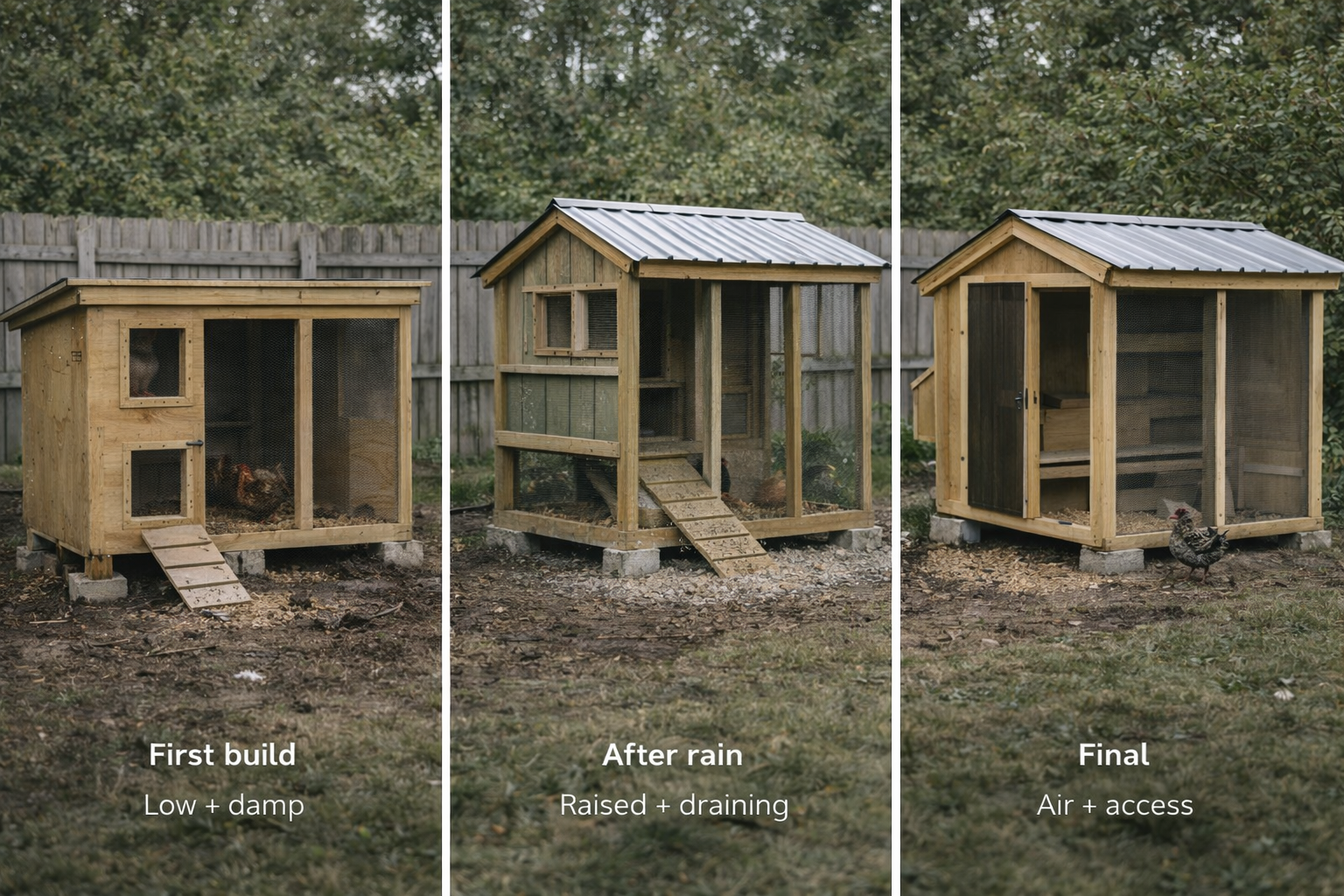
- Add vents: Install roof or wall vents high up.
- Open windows: Use wire mesh to keep predators out.
- Clean bedding: Change litter often, especially in summer.
- Space out hens: Avoid overcrowding; follow the rule of 3–4 sq ft per bird.
- Raise waterers: Prevent spills that increase humidity.
- Monitor daily: Smell and check for moisture every morning.
Practical Example
One backyard owner noticed her hens laying fewer eggs and coughing. She opened a small window, added a vent, and cleaned the bedding twice a week. Within days, the smell vanished, and her hens became more active. Egg production returned to normal.
Comparing Ventilation Solutions
Here’s a quick look at different ventilation methods:
| Method | Cost | Effectiveness | Maintenance |
|---|---|---|---|
| Roof vents | Medium | High | Low |
| Open windows | Low | Medium | Medium |
| Electric fans | High | Very high | Medium |
Non-obvious insight: Simple, passive solutions—like roof vents—often outperform expensive fans in small runs. Fans may stir up dust and stress hens.
Why Air Quality Matters For Health
Poor air affects not only eggs but also the life of your hens. Respiratory diseases, stress, and infections can spread rapidly in stagnant air. Healthy hens live longer, lay better, and cost less in vet bills.
For more on poultry health and ventilation science, visit this Wikipedia Poultry article.
Final Thoughts
Don’t let poor air ruin your hard work. Small runs need constant airflow for happy, productive hens. Check your run often, act on signs of trouble, and use simple fixes. Your hens—and their eggs—will reward you.

Frequently Asked Questions
How Often Should I Ventilate My Chicken Run?
Ventilation should be constant. Keep vents and windows open every day, adjusting for weather.
Can Stagnant Air Cause Diseases In Hens?
Yes. Stagnant air increases bacteria, mold, and ammonia, leading to respiratory and digestive diseases.
What’s The Ideal Temperature For Laying Hens?
Between 65°F and 75°F (18°C–24°C) is best. Above 85°F (29°C), hens face heat stress, especially in stagnant air.
How Can I Test Air Quality In My Run?
Use your nose—ammonia smells strong. You can also buy inexpensive ammonia test strips for more accuracy.
Do Automatic Fans Help Small Chicken Runs?
Fans can help, but passive ventilation (vents, windows) is often better. Fans may stir dust and scare hens if not used carefully.
