
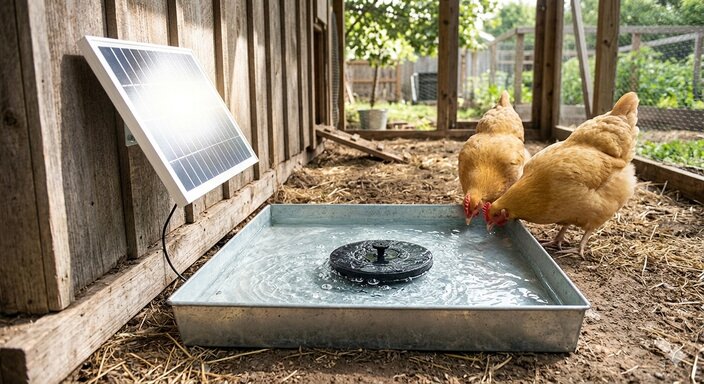
There is nothing quite as discouraging as walking out to the coop on a beautiful morning, only to find your girls’ water tray covered in a thick, slimy layer of green algae. In the humid heat of mid-summer, stagnant water can turn from fresh to “swampy” in less than twenty-four hours. For those of us with coops located way out past the garden or tucked in the back corner of a suburban lot, running extension cords is a tripping hazard and a fire risk. Solar power has become my go-to solution because it brings automation to the furthest corners of the property without needing a single outlet or a call to an expensive electrician.
The secret to a clear basin isn’t just constant scrubbing; it’s surface tension. Algae thrives in still, warm water that is baked by the sun. To break that cycle, I’ve found that keeping the water moving is the most effective natural deterrent. If you’re looking for a simple, budget-friendly way to start, I highly recommend looking into the AUTGAS 1W Solar Fountain. It’s a tool I’ve personally tested in my own run, and you can see how it handles the dust and dander in my detailed hands-on review.
The Off-Grid Advantage
Using solar energy to fight algae isn’t just about being “green”—it’s about homestead logic.
- Zero Fire Risk: Extension cords in a coop filled with dry straw and wood shavings are a recipe for disaster. Solar removes that danger entirely.
- Automatic Operation: The sun that causes the algae to grow is the same sun that powers the pump to stop it. It’s a self-regulating system.
- No Monthly Bills: Once you set it up, your “electricity” for the coop is free for the life of the unit.
5 Signs Your Water Setup is Failing
If you aren’t sure if your water is healthy, look for these “red flags” during your morning chores:
- The “Slippery” Test: If the inside of the tray feels slimy to the touch, even if the water looks clear, a biofilm is already forming.
- Lethargic Hens: Chickens will avoid drinking “skunky” water, which leads to dehydration and a drop in egg production.
- Mosquito Larvae: If you see tiny “wigglers” in the water, it has been stagnant for far too long.
- Discolored Bedding: Wet, green-stained bedding around the tray usually means the water is overflowing or getting “gunky.”
- Smell: Fresh water shouldn’t have a scent. If it smells earthy or sour, algae is winning.
Your 3-Step Action Plan
You don’t need to be a tech expert to set this up. Here is how I recommend implementing a solar aeration plan:
- Relocate to the Shade: Move your drinking tray into the coolest part of the coop or run. Sunlight is the fuel for algae growth.
- Install the Aerator: Place your solar pump in the center of the tray. Use the bare pump (no fountain nozzles) to create a gentle “bubbling” effect that breaks the water’s surface.
- Position the Panel: Mount the solar panel on the south-facing side of your coop roof to ensure it gets the strongest afternoon rays, which is when the water is most at risk of heating up.
Solar Maintenance (Pro Advice)
To keep your gear running through the dusty summer months, follow these habits:
- The Saturday Wipe: Chickens are incredibly dusty. Every weekend, take a damp rag and wipe the film of dander off your solar panel.
- Check for “Snappy” Hens: Inspect your wires once a month. Sometimes a bored hen will take a peck at a loose cord. If you see damage, wrap it in a bit of electrical tape or a protective sleeve.
- Clear the Filter: Small feathers and straw can get sucked into the pump intake. Give the filter a quick rinse under the hose every few days.
FAQs
Will the aerator work on cloudy days?
Most 1W units will slow down or stop when it’s heavily overcast. However, even a few hours of movement during the peak of the day is often enough to disrupt the algae growth cycle.
Is the moving water scary for the chickens?
Not at all. In my coop, the girls were a little curious at first, but once they realized it meant cooler, fresher water, they didn’t mind the gentle bubbling one bit.
Do I need a battery backup?
For algae prevention, you really only need the pump to work while the sun is out, as that is when algae grows. A battery is a “nice-to-have,” but a direct-drive solar pump is usually sufficient for this specific job.
Expert Tip from the Coop
After decades of keeping birds, I’ve learned that clean water is the cheapest health insurance you can buy for your flock. A simple solar aerator saves your back from constant scrubbing and keeps your girls’ immune systems strong.
Final Expert Tip: If you notice your water is still getting warm, try adding a handful of large, clean river stones to the tray. They stay cool and provide “perches” for the aerator to sit on, keeping it away from any sediment at the bottom!