
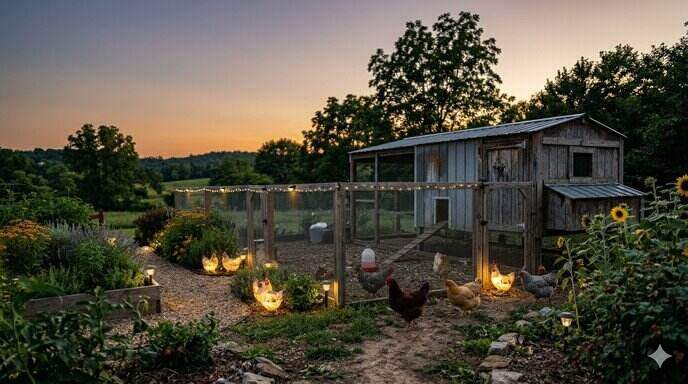
Walking out to your barnyard after dark only to trip over a stray feeder or freeze in your tracks at the sound of a rustling bush is a classic chicken-keeper struggle. When your setup sits far from a household outlet, navigating those pitch-black spaces makes evening wellness checks downright stressful. Dragging high-voltage extension cords across the lawn invites dangerous shock hazards in damp grass and a severe fire risk near dry bedding. Completely independent solar power is the most practical solution for remote homestead properties because it harvests free daylight to gently illuminate your footpaths and run boundaries, keeping you safe and predators visible without any complex, high-voltage wiring.
In my coop, I’ve found that standard backyard security spotlights do far more harm than good, frequently blinding you during chores and shocking your birds awake in a state of panic. To keep your property secure without stressing your flock, you need low-profile, ambient fixtures that direct their glow downward rather than straight into the coop windows. If you are looking for a beautiful, flock-friendly way to mark your garden borders and walkways, I highly recommend reading my real-world testing of the best warm LED chicken statues on the market today. These weather-resistant, solar-powered accent pieces add wonderful country charm during the daytime and cast a soft, protective amber boundary along your run fencing after dusk.
The Off-Grid Advantage
Upgrading your outdoor spaces with self-contained solar landscape lighting offers critical safety benefits that focus heavily on flock well-being and your wallet:
- Absolute Fire Security: These fixtures operate entirely on low-voltage internal battery storage, which completely eliminates the risk of electrical sparks near dry straw, molted feathers, and wood shavings.
- Automatic Nighttime Defense: Built-in photocells turn the warm lights on automatically at twilight, changing the visual landscape and discouraging curious nocturnal predators before you even step outside.
- Zero Utility Overhead: The solar cells replenish their own batteries completely free of charge every single afternoon, letting you run a gorgeous evening lighting scheme with no hidden costs on your monthly electric bill.
Spotting Blind Spots and Lighting Stress Red Flags
Take a slow walk around your poultry setup at dusk to evaluate your current layout for these specific structural and behavioral issues:
- The “Ink-Black” Foundation Shadow: Look closely under elevated coops or right behind your nesting box extensions. If these areas are in deep shadow, small predators can work on breaching your hardware cloth completely unseen.
- Walkway Traps and Obstacles: Inspect the main path leading from your door to the run gate. Loose roots, hidden ruts, or mud patches turn into serious tripping hazards during a midnight emergency check if your trail lacks clear boundary markings.
- Agitated Evening Roosting: Peer through your coop window after dark. If your hens are pacing the roosting bars or vocalizing nervously, harsh, flickering shadows from overhanging tree branches are likely keeping them awake.
- Perimeter Tunnel Signs: Check the loose soil right along your hardware cloth baseboards. Unlit perimeters give mice, rats, and weasels the quiet coverage they need to map out structural entry points.
The 3-Step Low-Intensity Setup Plan
You do not need an electrical background or specialized tools to build a functional, beautiful night boundary that keeps your flock calm. Follow this simple 3-step action plan:
- Pinpoint Maximum Daylight Spots: Select locations along your footpaths and garden borders that receive at least six hours of unobstructed afternoon sun. Keep the internal charging cells clear of overhanging barn eaves or heavy tomato trellises.
- Stagger Your Warm Glow Points: Position your ambient fixtures or decorative solar statues four to six feet apart along your main path and directly at the critical, vulnerable corners of the wire run.
- Aim Light Down and Away: Ensure all light lenses face downward toward the grass or point outward away from the coop building. This keeps the light on the ground where you walk and where predators approach, leaving the interior of the coop dark and peaceful.
Solar Maintenance (Pro Advice)
Active backyard homesteads are incredibly dusty, and airborne dander can quickly block out vital sunlight from your solar cells. Keep your gear operating at peak performance with these four simple habits:
- The Weekend Lens Wipe: Chicken dander contains natural body oils that create a thick, cloudy glaze over solar panels. Wipe your charging cells down with a damp microfiber cloth every Saturday to prevent a 25% drop in battery storage capacity.
- Prune Fast-Growing Summer Foliage: Fast-growing weeds, pumpkin vines, or low-hanging branches can overshadow small solar panels in just a few days. Keep all surrounding leaves trimmed back sharply.
- Shift Angles for Low Winter Sun: In late autumn, adjust any moveable panels to a steeper 50-degree angle. This helps them capture the low-slung winter sun directly and allows heavy morning frost or snow to slide off automatically.
- Keep Bases Cleared of Bedding: Hens love to scratch for bugs around garden borders, often throwing loose mulch or soil over low-profile path lights. Check your fixtures weekly to make sure they haven’t been buried by busy claws.
FAQs
Will the soft light from landscape fixtures stop my chickens from sleeping? No. Soft, warm-spectrum LED lights (around 2700K or lower) mimic the natural, gentle tones of twilight. They will not interfere with your flock’s sleep or egg-laying cycles like harsh, blue-spectrum security spotlights or bright white utility floodlights will.
Can these solar decorative fixtures handle muddy runs and heavy rain? Yes, provided you choose fixtures that carry an outdoor weatherproofing rating of IP44 or higher. This certification guarantees that the battery compartments and internal circuitry are sealed tight against heavy rainstorms, morning dew, and blowing mud.
How many hours of light will these solar fixtures provide each night? On a standard clear day, a quality internal solar battery stores more than enough energy to run the warm LEDs for roughly 8 to 10 hours, easily keeping your garden pathway illuminated until the sun rises.
Conclusion
Creating a beautifully lit evening environment around your property doesn’t require high-voltage utility lines or ugly commercial fixtures. By integrating safe, self-contained solar accent pieces around your boundaries, you can eliminate scary blind spots, protect your birds from nighttime stress, and enjoy a warm, welcoming homestead path every single evening.
Final Expert Tip: My girls were much happier once I placed our low-profile solar decorations directly along the outer perimeter fence line rather than right against the coop door. Pushing the warm ambient light out to the fence lines sweeps the shadows completely away from the structure, giving my hens a peaceful night’s rest while making my final evening rounds incredibly safe and easy!
