
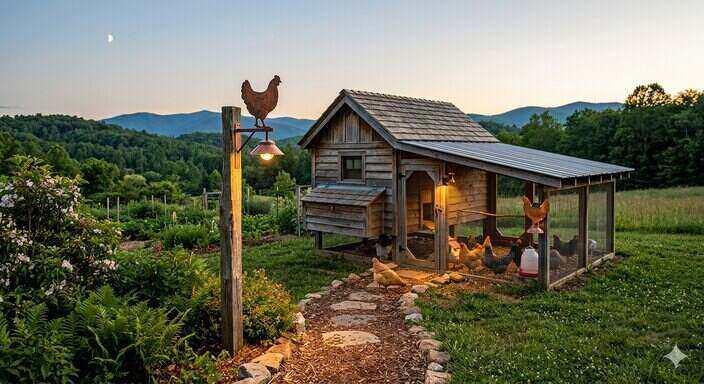
Stepping out onto your property for a late-night wellness check only to realize your coop perimeter is a wall of ink-black shadows is enough to make any chicken keeper’s blood run cold. You find yourself straining to hear if that rustling near the run is just the wind or a persistent predator testing your hardware cloth. Dragging a standard grid-powered extension cord across your yard to power a floodlight creates a massive fire hazard in dusty bedding and a dangerous short circuit risk on damp grass. Independent solar power is the most practical solution for remote poultry setups because it captures the sun’s energy by day to provide reliable, low-voltage illumination exactly where you need it, completely off the grid.
In my coop, I’ve found that high-intensity white spotlights do more harm than good, often blinding you during chores and panicking sleeping birds into injuring themselves. To maintain a peaceful, secure perimeter, you want low-intensity accent lighting that provides just enough ambient glow to check your boundaries without disrupting your flock’s natural sleep cycle. If you want a functional yet charming way to mark your coop pathways, I highly recommend checking out my hands-on testing of the best solar chicken figurines on the market. These tough, weather-sealed decorative units emit a soft, warm light right at ground level, giving you excellent path visibility while keeping the overall environment calm and stress-free.
The Off-Grid Advantage
Utilizing self-contained solar lighting around your poultry infrastructure offers distinct practical benefits over traditional hardwired options:
- Absolute Fire Safety: Operating entirely on low-voltage internal batteries means there is zero risk of electrical sparks igniting dry straw, feathers, or fine wood shavings.
- Hands-Free Operation: Built-in dusk-to-dawn sensors automatically activate the fixtures as twilight settles, guaranteeing your perimeter is illuminated even when you aren’t home to flick a switch.
- True Grid Independence: Severe seasonal storms can easily knock out your neighborhood grid power, but your independent solar layout will keep working perfectly throughout the night.
Identifying Visibility Gaps and Flock Stress
Take a walk around your coop area just after dusk to evaluate your current setup for these specific environmental and structural issues:
- The “Drop-Off” Blind Spots: Check the low-lying zones around the back of your run or under an elevated floor. Permanent shadows in these areas allow small predators to dig or chew undetected.
- Perimeter Navigation Obstacles: Look at your main path. Hidden roots, stray water buckets, or muddy ruts can cause a nasty fall during a midnight emergency check if your walkway lacks ground-level guidance.
- Anxious Evening Roosting: Observe your hens through the window. If they are pacing the roost bars or vocalizing long after dark, harsh external moving shadows (like wind-blown tree branches) are likely keeping them on high alert.
- Hidden Pest Corridors: Inspect the soil along your run’s baseboards. Unlit perimeters make it easy for mice and rats to establish regular travel routes into your feeding stations completely unbothered.
The 3-Step Ambient Setup Plan
You can quickly design an effective, predator-deterring ambient light boundary without touching a single wire or hiring outside help. Follow this simple plan:
- Map Out Your Solar Access: Select spots along your pathways and run corners that receive at least six hours of unfiltered daylight. Keep the fixtures away from low-hanging eaves or thick garden brush.
- Establish Ground-Level Contrast: Place your low-voltage ambient fixtures or decorative solar units directly along your primary walking path and right at the vulnerable corners of the run.
- Direct the Light Downward: Ensure the lenses face downward or outward toward the perimeter. This focuses the ambient glow onto the ground where you walk and where predators approach, keeping the light out of your hens’ eyes.
Solar Maintenance (Pro Advice)
Airborne dander and backyard dust can quickly degrade the efficiency of your solar components. Keep your gear running smoothly by practicing these four habits:
- The Weekend Lens Wipe: Chicken dander carries an oily residue that clouds plastic and glass panels. Wipe your solar collectors down with a damp cloth every single week to prevent a 20% drop in charging capacity.
- Clear the Foliage Line: Fast-growing summer weeds and garden vines can creep over your panels in just a few days. Trim back any encroaching leaves to keep your sun collectors fully exposed.
- Shift the Angle for Winter: In late autumn, angle your solar panels more sharply toward the southern horizon. This optimal positioning catches the low winter sun and helps the panel shed heavy frost and snow automatically.
- Check the Ground Seats: Ensure stake mounts and heavy decorative units stay firmly positioned in the soil. Loose dirt from scratching hens can tilt your fixtures away from their optimal sun angles.
FAQs
Will ambient night lighting stop my chickens from laying eggs or cause them to molt? No. Soft, warm-spectrum ambient lighting placed outside at ground level will not interfere with their laying cycles or trigger a molt. Only high-intensity interior lights left on for extended hours affect a hen’s hormonal system.
Can these solar fixtures withstand heavy downpours and muddy runs? Yes, provided they carry an outdoor weather rating of at least IP44 or higher. This certification ensures the battery compartment and internal circuitry are sealed tight against heavy rain, morning dew, and flying mud.
What color temperature is best for ambient coop lighting? Always choose warm white or amber tones (around 2700K). These softer spectrums provide excellent night-vision contrast for human eyes while remaining completely unobtrusive to your sleeping flock.
Conclusion
Choosing the right night lighting for your coop area doesn’t mean blinding your birds with industrial spotlights or dealing with dangerous extension cords. By integrating safe, low-voltage solar accent pieces around your perimeter, you create a secure, highly visible homestead layout that keeps chores easy and your flock perfectly relaxed.
Final Expert Tip: My girls were much happier once I placed our ambient lights along the outer fence line rather than right against the coop door. Moving the soft light out to the perimeter boundaries pushes the shadows further away from the structure, which completely stops nocturnal pests from sneaking up to the building while allowing my hens to sleep in total peace!
