
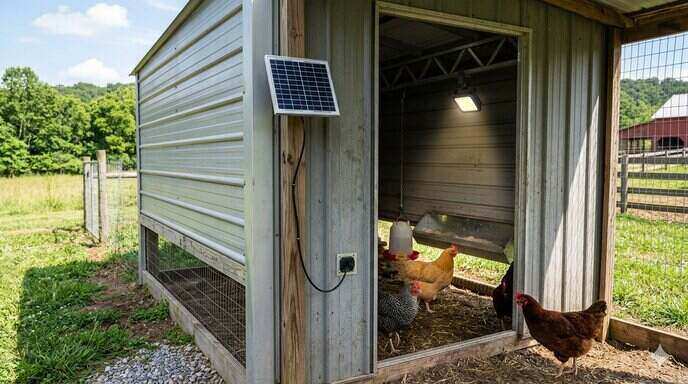
There is nothing quite like the panic of heading out to the coop after dark because you heard a strange ruckus, only to find yourself fumbling with a weak smartphone flashlight in total darkness. For those of us with solid metal coops located far out on the pasture or property line, checking on the flock at night is a challenge. Dragging heavy extension cords across the yard is a recipe for a dangerous short circuit. Independent solar power is the single most practical solution for remote structures because it allows you to bring crisp, bright light to the furthest corners of your property without a single grid connection.
In my coop, I’ve found that traditional screw-in glass bulbs or bulky shop lights simply aren’t suited for the vibrating, dust-heavy environment of a steel panel building. To get the best visibility without creating a fire hazard, you need low-profile, chip-on-board technology that mounts directly to the metal frame. If you’re tired of working in the dark, I highly recommend checking out my hands-on testing of the Best clip on solar powered cob lights for metal chicken coops. These units feature heavy-duty spring clamps that grip steel rafters perfectly, meaning you won’t have to drill permanent holes into your metal roof panels.
The Off-Grid Advantage
Utilizing solar energy to light up a metal outbuilding isn’t just a matter of convenience; it’s a critical matter of flock safety.
- Zero Fire Risk: A traditional electrical short in a coop packed with dry straw, wood shavings, and flammable chicken dander can turn catastrophic in minutes. Low-voltage solar components completely remove this hazard.
- No Grounding Woes: Steel buildings are notorious for grounding issues when people try to run DIY extension cords through the door frames. Solar operates on its own self-contained loop.
- Completely Free Operation: Once your panels are mounted, you can check your birds, collect late eggs, or clean the roost bars after dark without adding a single cent to your monthly power bill.
Signs Your Coop Needs Better Interior Lighting
Don’t wait for a midnight predator emergency to realize your lighting setup is inadequate. Look for these specific warning signs during your evening chores:
- Disoriented Roosting: If you find your hens sleeping on the cold floor or crowded in the nesting boxes rather than up on their high roosting bars, they likely can’t see well enough to fly up before nightfall.
- Hidden Condensation: Shine a light on your ceiling. If you see water droplets forming on the bare metal interior, your flock is trapped in a humid environment that can hide respiratory irritants.
- Signs of Rodent Entry: Small, dark droppings along the wall tracking or chewed corners of feed bags are clear indicators that rats or mice are moving in under the cover of darkness.
- Lethargic Evening Behavior: When birds refuse to move toward the feeder during late autumn afternoons, the early darkness is artificially cutting their eating schedule short.
The 3-Step Homestead Setup Plan
You can install a safe, high-powered solar lighting system inside a metal building in less than twenty minutes without touching an electrician’s toolset. Here is the exact plan I use:
- Mount the External Panel: Place the solar panel on the exterior of your metal coop using a heavy magnet mount or by attaching it directly to the south-facing fascia board where it can catch unobstructed sunlight.
- Route the Wire Safely: Thread the thin connection cable through an existing wall vent or the ridge cap gap. Always run the wire down a structural corner post rather than letting it drape loosely across open space.
- Clip the COB Light to a Rafter: Take your COB light unit and attach the heavy-duty spring clamp directly to an overhead steel truss or framing support. Position it over the main feeder or center aisle rather than directly above the nesting boxes to prevent disrupting broody hens.
Solar Maintenance (Pro Advice)
Solar gear inside a busy poultry run is subjected to intense wear. Keep your system operating at peak performance with these simple habits:
- The Weekly Dust Dusting: Chicken dander is incredibly fine and oily. It will coat the glass face of an outdoor panel or interior light quickly, reducing its output. Wipe down both surfaces with a microfiber cloth every Saturday morning.
- Protect the Slack: Chickens love to peck at dangling lines. Secure any extra cord slack tightly against the metal siding using heavy-duty exterior zip ties or magnetic cable clips.
- Angle for Winter: As the seasons change, remember to tilt your external solar panel further downward to catch the lower winter sun, ensuring the internal battery gets a full charge even on short days.
FAQs
Can COB lights handle the extreme vibration of a metal building in high winds? Yes, this is exactly where chip-on-board (COB) technology shines. Unlike old-school bulbs with delicate internal filaments that can shatter from continuous metal vibration or heavy doors slamming, COB lights are solid-state and highly shock-resistant.
Will leaving the light on all night disrupt my hens’ sleep cycle? Absolutely. Chickens need 8 to 10 hours of complete darkness to rest properly. Use a solar light that has a manual pull-cord, a remote control, or a built-in timer so it only runs when you are physically in the coop or during the early evening.
How do I clean the light if it gets covered in chicken dust? Turn the unit off completely. Take a dry, soft-bristled brush to remove the loose dander, then follow up with a lightly damp rag. Never spray water or liquid cleaners directly onto the light casing.
Conclusion
Bringing reliable, off-grid light into a metal coop shouldn’t require complex wiring or compromising on safety. By opting for a self-contained solar setup, you give yourself the visibility you need to handle evening chores easily while keeping your birds completely safe from electrical hazards.
Final Expert Tip: My girls were much happier once I positioned the interior light so it cast a soft glow across the main ramp. If you have younger pullets that are struggling to find the doorway at dusk, place your clip-on light near the entrance for a few days—the hens will instinctively march right toward the warm glow when the sun starts to set!
