
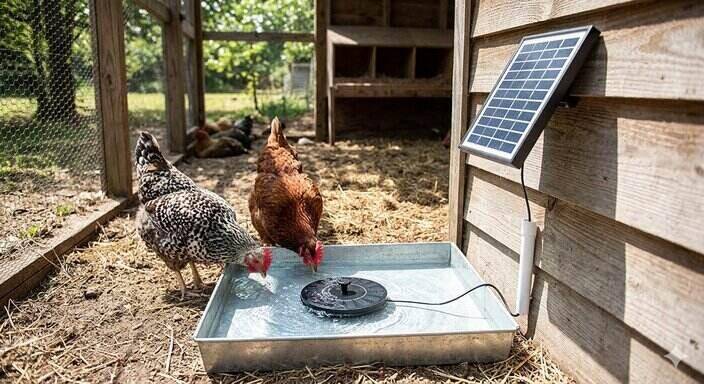
There is nothing quite as disheartening as walking into your coop during a brutal July heatwave and finding your usually vibrant hens panting heavily, wings drooped, with empty nesting boxes to boot. When extreme heat hits, chickens quickly lose their appetite, and their egg production drops like a stone as their bodies struggle to stay cool. The real problem is often hiding in their waterer—hens flatly refuse to drink warm, stagnant water, which quickly leads to dangerous dehydration. For coops situated far from an outdoor outlet, extension cords present a serious fire hazard in dry bedding, making independent solar power the safest, most practical way to keep things running.
In my coop, I’ve found that the fastest way to get hens drinking again is to lower the water temperature and break the surface tension to keep it fresh. If you want a versatile system that you can customize to fit your specific watering setup, I highly suggest checking out my hands-on testing of the AISITIN 3.5W DIY Solar Fountain. It features a separate panel with a long cord and a split-line setup that makes it an absolute winner for custom homestead projects.
The Off-Grid Advantage
Deploying solar power to combat summer dehydration offers clear benefits that make daily chores much easier:
- Zero Fire Risk: Avoid running hot extension cords through highly flammable chicken dander, feathers, and dry pine shavings.
- Proactive Protection: The system automatically pumps at peak capacity during the hottest hours of the day when your flock is most at risk.
- Zero Running Costs: You can keep thousands of gallons of water moving throughout the summer season without adding a single penny to your power bill.
How to Identify and Fix Heat Stress
When temperatures spike, monitor your flock closely and inspect the coop for these critical warning signs:
- Panting and Pale Combs: Hens don’t sweat; they cool down by breathing with open beaks. If their combs look pale and shriveled, they are reaching a dangerous level of dehydration.
- Warm, Slimy Basins: Check the water tray. Warm, unmoving water allows a clear biofilm to develop within hours, making it taste sour and causing the girls to reject it.
- Complete Loss of Appetite: If the feed scoop stays full at night, your hens are too hot to digest grain, which instantly halts egg production.
- The “Egg Drop”: A sudden, sharp decline in daily egg counts is the ultimate indicator that your flock’s bodies are routing all energy away from laying just to survive the heat.
Read More: Best Solar Powered Floating Water Aerators for Poultry Drinking Trays
The 3-Step Homestead Setup Plan
You can easily build a reliable cooling station using basic tools without hiring a professional. Here is the plan I use:
- Elevate and Shade the Waterer: Move your main water station completely out of the sun and lift it slightly off the ground to prevent chickens from scratching warm dirt into the basin.
- Set Up the DIY Pump: Place the submersible pump in your water tray or large bucket. Avoid the high-spray fountain attachments; instead, utilize a simple hose extension to create a gentle, bubbling spillway that aerates without splashing water out of the tray.
- Secure the Split-Panel: Mount the 3.5W solar panel outside the run on a south-facing post. Run the connection wire safely out of reach of curious beaks, ensuring the pump gets full power while the water stays in the shade.
Solar Maintenance (Pro Advice)
Keep your solar setup running at peak efficiency through the peak of summer with these straightforward habits:
- The Midday Cleansing: Dander and flying dust from dust-bathing hens will coat the solar panel quickly. Wipe the glass face with a damp microfiber cloth every few days to keep the energy conversion high.
- Protect the Wiring: Chickens love to peck at bright or loose things. Use split-tube plastic conduit to cover any exposed wire running along the frame of the run.
- Rinse the Foam Filter: Algae bits and feathers can slow down a small motor. Pop the plastic casing off the pump once a week and flush the internal sponge under a garden hose.
Read More: The Smart Way to Automate an Off-Grid Chicken Coop Without Electricity
FAQs
Will this keep the water running if a cloud passes over? The 3.5W panel is strong enough to maintain a low hum through light cover, but direct-drive solar pumps will slow down under heavy overcast skies. Fortunately, hens need the water moving most when the sun is blazing hot.
Is it safe to put ice directly into the watering tray with the pump? Yes. In fact, dropping a few large frozen blocks of water into the tray during a triple-digit afternoon is an excellent strategy. The pump will circulate the ice-cold water evenly, encouraging the flock to drink more.
Can this setup handle deep water buckets? Absolutely. Because this is a DIY style kit with a separate pump and panel, you can submerge it at the bottom of a five-gallon bucket or a shallow galvanized pan depending on your flock’s size.
Conclusion
Beating a summer heatwave is all about staying ahead of your flock’s hydration needs before they stop laying. My girls were much happier once I gave them a constant supply of fresh, circulating water, and our daily egg counts stayed remarkably steady right through the dog days of August.
Final Expert Tip: If egg shells start getting thin during a heatwave, it’s often a sign of calcium depletion caused by hyperventilation (panting). Keep a separate small cup of crushed oyster shell right next to your newly aerated water station—the girls will instinctively take what they need as they drink!
