
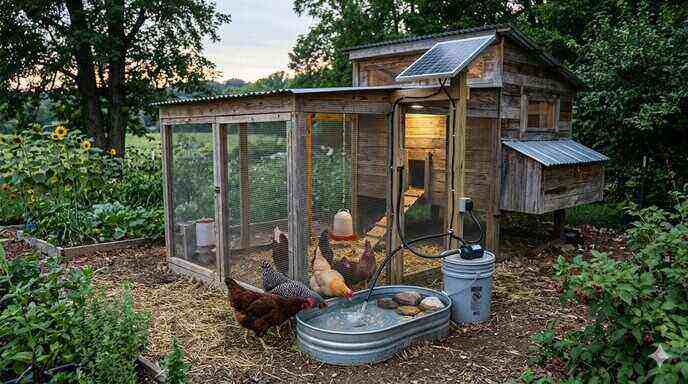
Walking into your backyard early in the morning only to be hit by a wave of stale, stagnant air and slimy, warm drinking water is a frustrating reality for many keepers. When your setup is located past the reach of the household grid, keeping things fresh requires constant manual hauling and heavy lifting. Running extension cords across your pasture is a recipe for a dangerous electrical fire or a short circuit during heavy downpours. Off-grid solar power is the most practical solution for remote poultry setups because it uses free daylight to run critical daily operations, keeping your water flowing and your environment clean without a single foot of trenching.
In my coop, I’ve found that stagnant water basins are the biggest threat to flock health, quickly turning into breeding grounds for harmful bacteria and mosquito larvae. To keep the flock hydrated without daily scrubbing, you need a low-voltage system that circulates and oxygenates the supply automatically during peak daylight hours. If you want a trouble-free way to keep things fresh, I highly suggest checking out my real-world review of the best Solar pond pumps for chicken water trays. These compact, low-maintenance setups use a small solar panel to keep water moving continuously, preventing algae buildup and ensuring your birds always have access to clean hydration.
The Off-Grid Advantage
Automating your poultry chores with self-contained solar systems delivers massive benefits that focus strictly on safety and your budget:
- Zero Shock Hazards: Because these circulation systems run on low-voltage direct current (DC), there is absolutely no risk of lethal shocks to your birds if a wire gets nicked.
- Automatic Day-Time Operation: The pump starts moving water the moment the sun hits the panel, aligning its peak performance with the exact hours your chickens are active and drinking.
- No Added Overhead: You get complete water basin automation with zero impact on your monthly utility bill, allowing your homestead to remain self-sufficient.
Spotting Hydration and Air Quality Flaws
Take a close look at your watering stations and interior spaces this week to identify these common health and structural warning signs:
- The Green Film Layer: Check the bottom of your plastic drinking pans. A slick, green film means the water is sitting stagnant under the sun, allowing algae to rob your birds of clean drinking water.
- Lethargic, Panting Hens: Observe your flock during the heat of the afternoon. If your hens are holding their wings out away from their bodies and panting, their water supply is likely too warm to cool them down.
- Heavy Ammonia Smell: Take a deep breath right at chicken eye-level. A sharp, burning smell indicates that spilled water has mixed with floor manure, creating dangerous fumes that ruin respiratory health.
- Beak Marks in Mud: Look directly underneath your waterer platform. Damp, muddy patches indicate a slow leak or frequent spilling, which attracts flies and undermines structural wood foundations.
The 3-Step Low-Voltage Automation Plan
You don’t need an engineering background or specialized tools to build a highly efficient, solar-powered watering loop. Follow this simple 3-step action plan:
- Mount the Sun Collector: Fix the small solar panel to the highest point of your south-facing coop roofline. Use simple mounting brackets and tilt the panel to catch the maximum amount of direct afternoon light.
- Position the Fountain Loop: Submerge the low-voltage pump into the center of a heavy-duty, multi-gallon reservoir bucket. Route the small water delivery tube down into your shallow drinking tray.
- Shield the Power Cables: Thread the low-voltage power line through a piece of split-plastic wire loom. Fasten it tightly to your framing posts using heavy-duty zip ties to keep it completely out of reach of curious beaks.
Solar Maintenance (Pro Advice)
A busy barnyard environment produces an incredible amount of fine dust and dander that can quickly reduce your solar efficiency. Build these simple habits into your routine:
- The Weekly Intake Flush: Chicken dander and loose feathers can clog small pump intakes. Pull the pump out every Saturday morning and rinse the internal sponge filter with clean water to maintain peak water flow rates.
- The Saturday Panel Wipe: Fine dust creates an invisible layer over solar panels that blocks sunlight. Wipe down your external panel with a damp microfiber cloth weekly to prevent a 20% drop in charging capacity.
- Check Wire Paths for Pecking Damage: Chickens love to investigate anything that looks like a worm. Inspect your shielded power lines monthly to ensure all protective casings remain perfectly intact and securely fastened.
FAQs
Will the solar water pump run during cloudy weather or at night? Direct-solar pumps run based on available sunlight, meaning they will slow down on cloudy days and stop entirely at night. This is actually perfect for your flock, as chickens do not drink after dark once they go to roost, saving wear and tear on your equipment.
Can these low-voltage pumps handle heavy backyard dirt and debris? Yes, provided you choose a model with a built-in pre-filter sponge. The sponge stops large pieces of grain, dirt, and dander from reaching the internal motor impellers, keeping the system running smoothly.
How deep should the water tray be for a solar pump setup? Keep your drinking tray shallow—roughly 1 to 2 inches deep—to prevent accidental drowning risks for smaller birds. Use a larger, covered reservoir bucket to hold the pump itself, feeding the fresh water down into the shallow tray using gravity or a small overflow line.
Conclusion
Automating your remote chicken coop doesn’t require complex grid wiring or expensive professional help. By using simple, low-voltage solar circulation loops, you can keep your water supply perfectly fresh and clean while cutting down on your daily morning chore routine.
Final Expert Tip: My girls were much happier once I placed a few smooth, heavy river rocks inside the shallow drinking tray right where the solar pump tube empties out. The stones break up the water flow, creating a soft, bubbling ripple effect that instantly catches the hens’ attention and encourages them to stay hydrated on hot summer days!
