
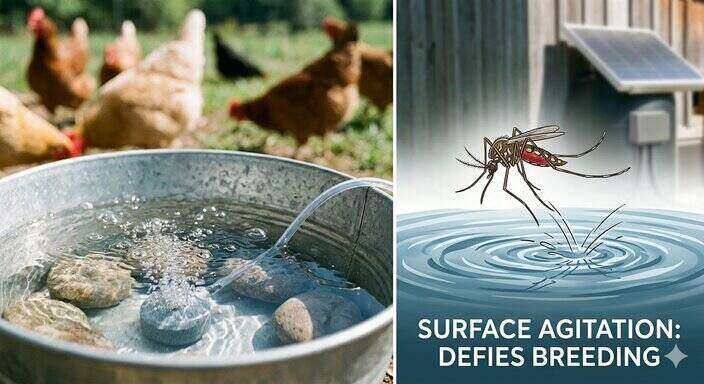
Walking into a stinky, humid coop on a mid-summer morning is bad enough, but seeing a cloud of mosquitoes buzzing around your chickens’ waterer is a total nightmare. Stagnant water turns your flock’s drinking station into a prime mosquito breeding ground in just 48 hours, exposing your birds to dangerous viruses like Fowl Pox. When your coop sits far out on the pasture, running Extension cords through the grass creates a massive fire and tripping hazard. Off-grid solar power is the most practical solution because it harvest free energy from the sun to keep your water constantly moving, destroying pest habitats without needing a single power outlet.
In my coop, I’ve found that dump-and-refill routines simply aren’t enough during peak bug season; if the water sits still for even a single afternoon, mosquitoes will find it. To stop these pests from multiplying, you must disrupt the surface of the water column so female mosquitoes cannot land to lay their eggs. If you are tired of dumping out gallons of water every day, you can easily Keep poultry water fresh with solar aeration by checking out my hands-on testing of the top-rated low-voltage air pumps built specifically for homesteaders. These simple kits use small bubblers to create a constant surface ripple that completely deters pests.
The Off-Grid Advantage
Deploying a small, dedicated solar setup to power your coop’s water movement offers huge advantages for safety-minded keepers:
- Zero Fire or Shock Risks: Low-voltage direct current (DC) solar kits remove all structural fire hazards associated with running 120V extension cords through dry straw and chicken dander.
- Peak Automation When Needed: The sun naturally triggers the system to run fastest during the hottest daylight hours—the exact time when mosquitoes are looking for still water to colonize.
- Complete Financial Self-Sufficiency: Once the kit is installed, it runs entirely on free ambient light, meaning you protect your birds with zero impact on your monthly household electricity bill.
Read More: How to Fix Dehydration and Drop in Egg Production During Summer Heatwaves?
Identifying Mosquito Breeding and Stagnant Water Red Flags
Catching a water quality issue early keeps your birds healthy and prevents a full-blown pest infestation. Look for these specific warning signs in your run:
- Tiny “Wrigglers” Beneath the Surface: Peer closely into the waterer’s basin. If you see tiny, worm-like organisms flipping and diving when you approach, you are looking at active mosquito larvae.
- A Thin Oil-Like Sheen: Examine the surface of the water. Stagnant water quickly develops a dull, oily-looking film composed of dust, pollen, and bacteria, which acts as an anchor for mosquito eggs.
- Head-Shaking and Face-Pecking: Watch your chickens’ behavior near the waterer. If your hens are constantly shaking their heads or pecking at their own combs and wattles, they are likely trying to fight off swarming mosquitoes.
- Heavy Algae Shadows: Look at the bottom of the tray. Dark green patches mean rapid algae growth is consuming the dissolved oxygen, turning the water foul and inviting more insect activity.
The 3-Step Solar Aeration Plan
You don’t need any technical skills or pricey handymen to install a solar bubbler. Follow this straightforward 3-step action plan:
- Mount the Solar Collector: Secure your small solar panel to a clear, south-facing section of your coop’s roof line. Tilt it slightly to capture maximum afternoon sun, making sure no tree limbs block its view.
- Submerge the Aerator Stone: Place the heavy-duty weighted air stone or bubbler attachment directly on the bottom floor of your chicken water barrel or bucket. Route the flexible, clear air tubing up through the lid.
- Secure the Air Line: Run the air tubing along the back corner post of the coop, slipping it inside a piece of rigid PVC pipe or split-plastic wire loom. Fasten the shielding tightly with U-clamps to ensure your chickens cannot pick or chew at the soft line.
Solar Maintenance (Pro Advice)
Coops are dusty, active environments that can quickly reduce the performance of electronic components if left neglected. Practice these three quick upkeep habits:
- Give the Panel a Weekly Wipe: Chicken dander and kicked-up dirt will quickly cover your solar panel. Wipe it clean with a damp towel every weekend to prevent a 30% drop in solar charging efficiency.
- Inspect the Air Stone for Scale: Minerals and biofilm can clog the tiny pores of your underwater air stone over time. Pull the stone out monthly and scrub it with a stiff brush and plain vinegar to keep the air bubbles flowing strong.
- Position for Seasonal Sun Shifts: As the seasons change, the sun drops lower in the sky. Readjust the angle of your roof-mounted solar panel in the autumn to ensure it continues to receive unobstructed light during shorter winter days.
FAQs
Will a solar aerator keep working during heavy rain or overcast weather? Most simple, budget-friendly solar air pumps run directly off real-time sunlight, meaning they will slow down on very dark, cloudy days. However, since mosquitoes only lay eggs when it is warm and calm, the system naturally works hardest exactly when the pests are most active.
Can my chickens knock over or damage the underwater bubbler? If left loose, curious hens might pull at the tubing. My girls were much happier once I weighted the air stone down with a clean, heavy river rock at the bottom of the bucket, keeping the equipment securely out of reach of busy beaks.
Does moving water completely stop mosquitoes from breeding? Yes, it does. Mosquitoes require absolute stillness to lay their eggs on the water’s surface tension. Even a gentle, steady ripple from a low-voltage solar air pump completely disrupts their ability to land, forcing them away from your coop entirely.
Conclusion
You don’t have to tolerate buggy, stagnant waterers or spend your summer hauling heavy water buckets back and forth across the property. Harnessing the clean power of the sun to keep your flock’s water moving takes the chore out of pest control, cuts down on your daily maintenance, and keeps your homestead truly self-sufficient.
Final Expert Tip: In my coop, I’ve found that adding a handful of clean, dried mint leaves or a splash of raw apple cider vinegar to the waterer works wonders alongside the solar bubbler. The aeration disperses the natural plant oils across the surface, creating an extra, completely safe scent barrier that mosquitoes absolutely despise!
