
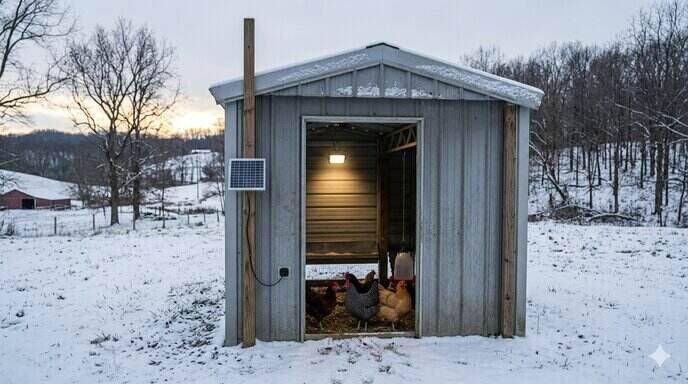
When winter hits, freezing northern winds can turn an afternoon trek to a remote metal coop into a miserable chore. You trudge out past dark, fumbling with a flashlight in the freezing cold, only to find your birds huddled in a pitch-black, freezing steel structure that blocks out every ounce of natural moonlight. Running standard extension cords across a snow-covered yard is an open invitation for a short circuit or a catastrophic fire. Independent solar power is the single most practical solution for an isolated metal coop because it lets you harvest the sun’s energy by day, giving you reliable, safe evening illumination precisely when your flock needs it most.
In my coop, I’ve found that winter condensation on cold steel walls will quickly short out cheap, plug-in shop lights or flimsy yard stakes. To keep your egg production steady and your evening chores safe through the darkest months, you need low-profile, battery-packed units that handle freezing temperatures without structural modifications. If you need a reliable way to light up your flock this winter, I highly recommend checking out my hands-on testing of the best cordless COB lights. These heavy-duty fixtures clamp securely onto interior steel support beams, providing brilliant, wide-angle illumination without requiring you to drill holes through your metal roof.
The Off-Grid Advantage
Bringing off-grid solar illumination into a metal structure during the winter months offers massive advantages for the practical homesteader:
- Zero Fire Hazard: Dry winter straw, wood shavings, and flying dander are incredibly flammable. Low-voltage solar fixtures remove the threat of high-voltage electrical sparks entirely.
- Completely Independent: Heavy winter ice storms or high winds can knock out grid power for days. Your self-contained solar lighting setup stays up and running regardless of the main power lines.
- No Impact on Your Budget: You can easily maintain your flock’s lighting schedule through the coldest months with absolutely zero impact on your monthly electric bill.
Spotting Winter Stress in Your Flock
Don’t wait until your egg basket is completely empty to realize your winter lighting setup isn’t doing its job. Watch for these specific cold-weather indicators inside a metal structure:
- Frozen Condensation Lines: Check the upper joints of your metal siding. If you see frost or frozen water droplets forming along the ceiling ribs, your coop lacks the right balance of airflow and warm illumination.
- Sudden Winter Molting: If your hens suddenly drop their feathers or go into a deep molting cycle in December or January, their bodies are reacting to the rapid, natural decrease in day length.
- Deep Corner Huddling: When birds crowd onto the damp floor bedding rather than flying up to their elevated wooden roosts at dusk, it means the interior is too dark for them to navigate safely.
- Rodent Tracks in the Litter: Look along the perimeter floor plates for fine, disturbed bedding. Mice and rats will use the extended hours of winter darkness to raid your feeders completely undisturbed.
The 3-Step Winter Installation Plan
You don’t need to hire an electrician to mount an efficient winter solar loop. Follow this simple, three-step action plan to get it done before the next freeze:
- Mount the Collector High: Fix your external solar panel to the highest point of your south-facing roofline. Use strong magnetic brackets or self-tapping screws backed with a generous dab of outdoor silicone to keep it 100% watertight.
- Shield the Feed Cable: Thread the power line through an existing gable vent or ridge cap gap. Encase the cable in flexible, split-plastic wire conduit to protect it from sharp metal structural edges and curious pecking.
- Position the Internal Unit: Snap your cordless fixture directly onto an overhead steel framing rail. Center the beam directly over the main feeder and waterer, while leaving the nesting boxes in soft, comforting shadow.
Solar Maintenance (Pro Advice)
Winter places a unique set of stresses on off-grid homestead gear. Keep your lighting system running efficiently with these simple habits:
- The Post-Snow Sweep: Clear any snow or ice accumulation off your external solar panel immediately after a storm. Even a thin layer of frost can cut your battery’s charging capability by half.
- The Bi-Weekly Dander Wipe: Chicken dander contains natural body oils that stick to plastic lenses. Wipe down your external panel and interior light covers with a damp cloth every two weeks to maintain peak charging output.
- Tilt the Panel Down: In late autumn, adjust your exterior solar panel to a steeper 50-to-60-degree angle. This sharp angle helps it shed winter snow automatically and directly targets the low winter sun.
FAQs
Will the freezing temperatures ruin the internal batteries? High-quality lithium batteries designed for outdoor homestead use handle cold well, but extreme, sub-zero temperatures will temporarily shorten their daily runtime. Keeping the unit mounted high up near the ceiling truss where warm air naturally collects helps protect battery performance.
How many hours of extra light do my hens actually need in winter? To maintain steady egg production through the winter, hens require roughly 14 hours of total light. Set your solar timer to provide a few hours of extra light in the early morning before dawn, rather than extending the evening, so your birds aren’t suddenly trapped in the dark at night.
Can these lights handle the vibration of heavy winds hitting a metal building? Yes. Unlike old-school incandescent bulbs with fragile internal wire filaments that snap under physical stress, solid-state COB light panels are incredibly durable and won’t fail when a metal roof rattles in a winter gale.
Conclusion
Adding safe, efficient winter light to a remote steel chicken coop shouldn’t involve running dangerous cords or risking a fire. By utilizing a rugged, off-grid solar setup, you can keep your egg basket full all winter long while making your freezing evening chores a breeze.
Final Expert Tip: My girls were much happier once I positioned our interior light so it cast a soft glow across the main exit ramp. If you have younger pullets that are hesitant to head out into the snow on crisp winter mornings, placing a warm light near the doorway gives them the confidence they need to step out and stretch their legs!
