
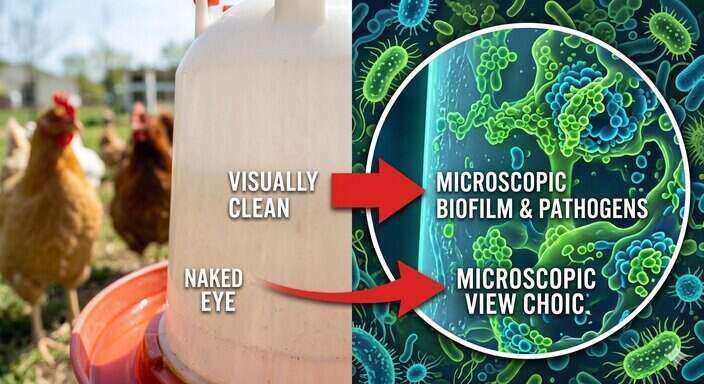
You walk out to the coop on a sweltering morning, drag out the heavy plastic waterer, and spend ten minutes scrubbing it down until your knuckles hurt. Yet, by tomorrow afternoon, a invisible, microscopic threat is already bouncing back inside the basin. When your setup sits far from a clean garden hose or a grid outlet, trying to keep water truly sanitary feels like a losing battle. Dragging power lines to run heavy filtration setups introduces massive fire hazards into dry bedding. Off-grid solar power is the most practical solution for remote setups because it captures free daylight to run automatic, continuous sanitizing loops, keeping your flock’s water truly clean without any grid power.
In my coop, I’ve found that even the most aggressive scrubbing leaves behind a microscopic layer of cellular slime called biofilm. This invisible film acts as a shield, hiding dangerous pathogens like E. coli and Salmonella right beneath the surface where standard brushes can’t reach them. To completely disrupt this cycle, you need a system that neutralizes bacteria at the cellular level before it can take over the water supply. If you are ready to ditch the scrub brush and upgrade to a hands-free, professional sanitation layout, take a look at my comprehensive guide on the best UV poultry purifiers for off-grid properties. These low-voltage units drop directly into your storage barrels to keep the water sterile on autopilot.
The Off-Grid Advantage
Automating your water sanitization with self-contained solar tech offers incredible advantages that keep your flock healthy and your homestead secure:
- Zero Extension Cord Dangers: Because these systems operate on low-voltage direct current (DC), you eliminate all risks of short circuits and electrical fires caused by frayed cords in damp coop bedding.
- Synchronized Daily Operation: The sun powers the purification loop during the hottest hours of the day—the exact time when bacterial reproduction peaks and your chickens are drinking the most.
- No Recurring Energy Bills: The entire setup runs completely on daylight, allowing you to maintain premium biosecurity standards with zero added cost to your monthly utility bill.
Signs Your Scrubbing Routine Is Failing
Take a close look at your flock and watering stations this week to spot these common indicators of underlying bacterial contamination:
- The Invisible “Slick” Test: Run your bare thumb across the inside wall of a freshly emptied, scrubbed container. If it feels slippery or greasy rather than squeaky clean, biofilm is already thriving.
- Bubbles Trapped on Container Walls: Look closely at the water column. Tiny, persistent oxygen bubbles clinging to the interior plastic are often a sign that organic matter is actively fermenting in the heat.
- Mysterious Egg Drops or Low Feed Intake: Keep an eye on production logs. If your hens are eating less or laying sporadically without showing obvious signs of injury, a low-grade, water-borne gut infection is often the culprit.
- Sour, Stale Water Odor: Take a quick sniff right above the open drinking trays. If the water smells slightly earthy, sour, or like rotting grass, harmful microbes have already bypassed your cleanings.
The 3-Step Solar Purification Plan
Setting up an automated, solar-powered sanitizing system is straightforward and requires no professional electrical experience. Follow this 3-step action plan:
- Mount the Collector Panel: Anchor your small solar panel to the highest point of your south-facing coop roof. Adjust the tilt to maximize direct sunlight exposure, ensuring it is completely clear of overhanging tree branches.
- Submerge the Low-Voltage Sanitizer: Drop your compact water purifier directly into the center of your main water holding barrel. Feed the insulated waterproof power cable up and out through a tight, secure notch in the barrel’s lid.
- Encase the Power Cables: Thread the low-voltage line through a length of heavy-duty, split-plastic wire loom. Fasten the loom tightly against your coop’s wooden framing studs with zip ties to keep the wires completely hidden from curious beaks.
Solar Maintenance (Pro Advice)
Coop environments are naturally dusty places, and a layer of barnyard debris can quickly compromise your solar gear. Build these simple habits into your routine:
- Wipe Down the Sun Collector Weekly: Chicken dander and feathers form a stubborn film over solar cells. Wipe the panel surface with a damp rag every weekend to avoid a 25% loss in charging efficiency.
- Check the Internal Sanitizer Sleeve: Dust and minerals can cloud the protective glass sleeve inside the water barrel. Wipe down the sleeve monthly to ensure the sanitizing rays penetrate the water completely.
- Inspect Wiring Paths Daily: Chickens love to peck at loose loops. Do a quick visual check during morning feedings to confirm your protective wire shielding remains tightly locked down and undamaged.
FAQs
Will the solar purifier keep working during long stretches of cloudy weather? Most low-voltage solar kits include a small, internal backup battery bank. This battery stores excess afternoon energy, allowing the purification loop to run smoothly even during overcast or rainy weather conditions.
Can these low-voltage systems handle water filled with loose dirt and chicken feed? While the purifier kills bacteria, it won’t remove large physical dirt chunks. My girls were much happier once I paired the purifier with a simple, washable pre-filter sponge to capture loose grain and debris before the water enters the sanitizing zone.
Is this type of automated purification safe for young chicks? Yes, it is perfectly safe. Unlike chemical additives that can easily be overdosed, natural solar purification systems leave no chemical residues or tastes behind, making the water incredibly crisp and clean for birds of all ages.
Conclusion
Relying strictly on manual water scrubbing leaves your flock vulnerable to microscopic bacteria that love to hide in hidden biofilm layers. Transitioning to a simple, low-voltage solar purification loop takes the physical strain out of your chore routine while providing your flock with the cleanest water possible.
Final Expert Tip: In my coop, I’ve found that using dark, opaque water reservoirs completely changes the game. When you combine an opaque barrel—which completely blocks out the sunlight that algae needs to grow—with a solar purifier, you stop slime dead in its tracks. You’ll switch from scrubbing every single morning to simply doing a quick, stress-free system check once a month!
